


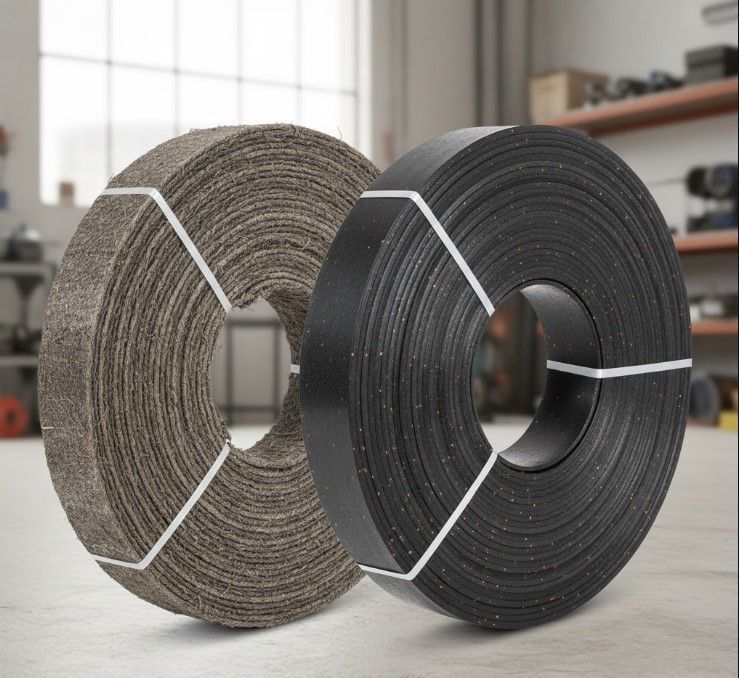
Brake systems are only as reliable as the materials that create friction. Understanding asbestos brake lining and asbestos free brake lining options is essential for engineers, buyers, and maintenance professionals who must balance safety, cost, and performance.
Modern industries rely on advanced brake lining materials designed to withstand heat, pressure, and repeated use without failure.
Brake linings are engineered friction materials that convert motion into heat through controlled resistance. They determine stopping power, noise level, wear rate, and safety under load.
In vehicles and machinery, the wrong material can reduce braking efficiency or cause premature failure. This is why industries carefully evaluate automotive brake linings and industrial brake lining products before purchase.
Understanding the composition, types, and practical applications of brake lining materials is essential for choosing the right solution for vehicles and industrial machinery.
For a detailed overview, read our blog on Brake Lining: Types, Materials and Applications.
Historically, asbestos was widely used in brake lining composition because of its natural heat resistance and fiber strength. These linings typically combined:
The resulting material functioned as a reliable high temperature brake material, capable of handling intense friction without losing structural integrity.
Asbestos fibers interlock within the matrix, creating a strong network that resists cracking and maintains friction stability. This made it a preferred choice for heavy duty brake linings in trucks, cranes, and industrial equipment.
However, despite performance benefits, health risks linked to airborne fibers led to strict regulation worldwide.
Modern operations prioritize safety and compliance, making non-asbestos brake linings the preferred choice for eco-friendly, high-performance braking solutions. Non asbestos brake pads eliminate health hazards while maintaining performance. These substitutes use advanced fibers and fillers such as:
These materials now define the standard for eco-friendly brake lining solutions across transportation and manufacturing sectors.
Asbestos based linings tolerate extremely high temperatures due to their mineral fiber structure. Modern engineered composites now match or exceed this capability using ceramic, aramid, and metallic blends designed for advanced thermal stability.
Traditional linings last long under heavy loads because asbestos fibers resist mechanical breakdown. New formulations, however, deliver similar or longer service life while producing less dust and maintaining smoother contact surfaces.
Stable friction is critical for predictable braking. Older materials performed reliably, but modern non asbestos compounds are engineered to maintain consistent coefficients across wider temperature ranges and varying pressure conditions.
Brake fade occurs when friction drops due to heat buildup. Contemporary composite linings dissipate heat faster, reducing fade risk during repeated or high speed braking cycles.
Asbestos linings can generate moderate vibration under certain loads. Advanced non asbestos blends often include graphite or damping fillers that reduce squeal and improve acoustic comfort.
Legacy materials typically produce more airborne residue during operation. Modern linings are formulated for low dust output, which helps maintain cleaner components and improves maintenance conditions.
Older asbestos formulations relied on natural fiber strength. New materials achieve equal or better structural integrity using reinforced synthetic fibers and optimized resin matrices.
Health concerns linked to asbestos fibers led industries to shift toward safer alternatives. Non asbestos materials eliminate airborne carcinogenic risk and align with global workplace safety requirements.
Organizations such as ISO, ASTM International, and SAE International define testing protocols for brake lining standards to verify friction stability, durability, and environmental compliance.
While asbestos materials were historically cheaper upfront, modern linings often provide better long term value due to reduced maintenance, cleaner operation, and longer replacement intervals.
| Industry / Application | Recommended Material Type | Key Performance Considerations |
|---|---|---|
| Passenger Vehicles | Ceramic, Semi-Metallic | Low noise, low dust, consistent friction |
| Commercial Trucks & Buses | Semi-Metallic, Organic Composites | High durability, heat resistance, long wear life |
| Industrial Machinery (Cranes, Presses) | Asbestos (legacy), Non-Asbestos Industrial Composites | Extreme load tolerance, heat stability, fade resistance |
| Rail & Metro Systems | Composite or Metallic | High friction stability, long service intervals, vibration resistance |
| Mining & Heavy Equipment | Non-Asbestos Heavy-Duty Composites | Maximum wear life, thermal stability, low maintenance |
| Specialty Motorsport | Carbon-Ceramic | Ultra-high temperature resistance, minimal fade, consistent performance |
For businesses and fleet operators looking for reliable components, sourcing high-quality brake liners in Dubai ensures consistent performance across trucks, buses, and industrial equipment.
Reputable brake lining manufacturers invest heavily in testing and material science. Global suppliers like Brembo, Bosch, and Federal-Mogul are known for producing certified friction components used worldwide.
Indicators of quality include:
When a brake system is activated, hydraulic or mechanical force presses the lining against a rotating surface. The friction generated converts kinetic energy into heat, slowing the system safely.
The effectiveness of this process depends on:
Properly engineered automotive brake linings maintain consistent friction across temperature ranges, which prevents sudden performance loss.
Selecting the right product requires technical evaluation rather than guesswork. Buyers comparing brake lining replacement options should assess:
Higher loads demand stronger fiber reinforcement and heat resistant binders.
Applications involving frequent stops or heavy braking require advanced composite formulas.
Dust, moisture, or chemicals may require specialized protective additives.
Premium materials often cost more upfront but reduce maintenance frequency and downtime.
Industrial buyers should never overlook documentation. Reliable suppliers provide:
Certified products tested under recognized brake lining standards ensure consistent results and regulatory compliance. Technical support availability is equally important. Suppliers offering engineering consultation reduce the risk of incorrect selection.
Material science continues to evolve. Researchers are developing hybrid composites combining ceramics, bio fibers, and advanced resins to improve sustainability and performance.
These innovations aim to produce next generation eco friendly brake lining solutions that reduce environmental impact without compromising durability or friction stability.
Asbestos linings use natural fibers for heat resistance, while non asbestos linings use synthetic or ceramic fibers for safer, environmentally friendly performance.
They are largely banned in many regions due to health risks, but some legacy or industrial systems may still have asbestos components.
Modern non asbestos composites often match or exceed asbestos durability when selected based on load, temperature, and application requirements.
Consider load, operating temperature, duty cycle, and compliance requirements, and consult manufacturers or experts for technical guidance.
Brake linings are a critical component of vehicle and machinery safety, impacting performance, durability, and compliance. Understanding the differences between asbestos brake linings and non asbestos brake linings helps buyers make informed decisions based on load, temperature, and environmental requirements.
Modern non asbestos materials provide safer, cleaner, and often longer-lasting solutions without compromising friction performance or reliability.
For residents and businesses in UAE, Hamza Fasteners Building Materials Trading LLC specializes in supplying high-quality brake linings and related components with certified materials, technical support, and expert guidance.
Contact our brake lining specialists to ensure optimal safety and performance for your vehicles.
Discover in-depth guides and practical insights to help you make informed decisions across industrial fastening and engineering applications.
November 14, 2024
November 28, 2024
December 14, 2024
December 28, 2024
January 17, 2025
All Rights Reserved © Hamza Fasteners