


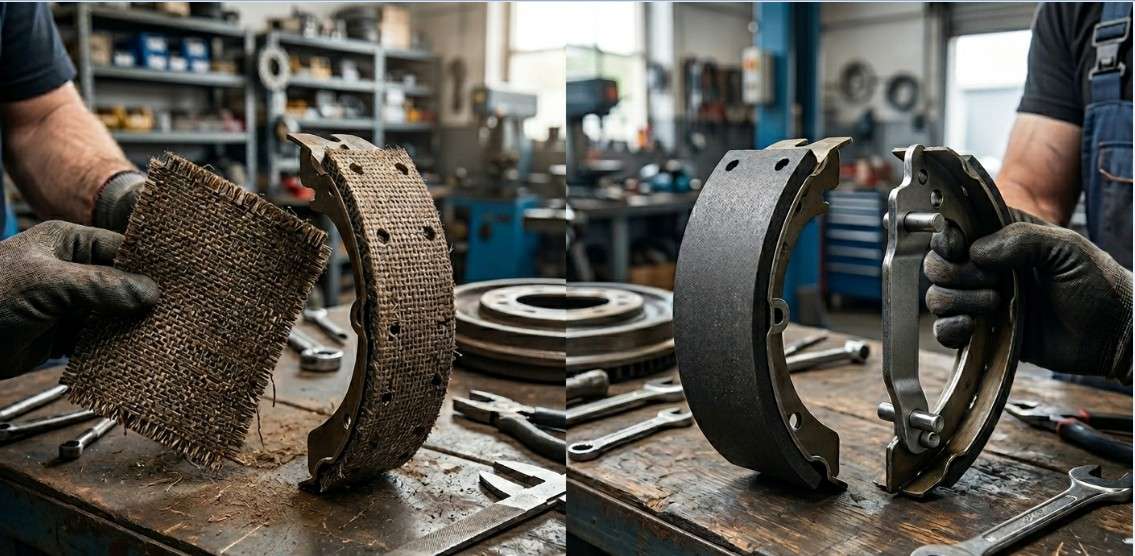
Brake linings are a critical friction component used in braking systems to slow or stop rotating parts such as drums and discs. Among the most widely used industrial and automotive options are woven brake linings and molded brake linings. Although both serve the same basic purpose, their construction, performance behavior, and ideal applications are significantly different.
Understanding these differences is essential for selecting the right lining for safety, durability, and operational efficiency.
A brake lining is a friction material mounted on a metal shoe or band. When pressure is applied, it contacts a rotating drum or disc to create friction, converting kinetic energy into heat.
Modern linings are typically asbestos-free and made using fibers, resins, and friction modifiers engineered for specific load conditions and temperature ranges. For industrial buyers looking for high-quality brake liners, choosing certified materials ensures long-term safety and consistent performance.
The key distinction between woven and molded linings lies in how these materials are structured.
Woven brake linings are made by weaving fibers such as glass, aramid, brass wire, or organic materials into a strong fabric. This fabric is then impregnated with friction compounds like resins and binders.
When pressure is applied, the woven fibers create friction against the drum or disc surface. Because of their fibrous structure, they maintain consistent grip even under tough conditions.
Woven brake linings are commonly used in:
In construction sites, woven linings are often preferred for lifting equipment because they can handle sudden load changes without losing braking efficiency.
Molded brake linings are manufactured by compressing friction materials into a solid shape using high pressure and heat. These materials often include resins, fillers, and friction modifiers, especially in advanced non-asbestos brake lining solutions designed for safer and eco-friendly performance.
Molded linings provide braking through a uniform friction surface. Since they are compact and dense, they deliver predictable performance but may not handle extreme stress as well as woven types.
Molded brake linings are used in:
In manufacturing plants with steady loads and controlled speed, molded linings are often chosen because they provide smooth and stable braking without frequent adjustment.
| Feature | Woven | Molded |
|---|---|---|
| Structure | Fibrous, flexible | Solid, dense |
| Strength | High | Medium |
| Heat Resistance | High | Moderate |
| Load Capacity | Heavy-duty | Light–medium |
| Braking | Strong grip | Smooth |
| Cost | Higher | Lower |
Choosing between woven and molded brake linings depends on your working environment and load requirements.
In a port crane system, woven brake linings are preferred because cranes frequently lift and drop heavy containers, causing sudden braking stress.
On the other hand, a conveyor system in a packaging plant typically uses molded brake linings because the load is constant and controlled, requiring smooth and silent operation.
Using the wrong type can cause:
This is why selecting the correct lining type is not just technical but also critical for safety and cost savings.
Woven vs molded brake linings explained with key differences in strength, heat resistance, cost, and applications. Learn which brake lining is best for heavy-duty or light industrial use.
The best material depends on the application, load, and heat conditions of the system. Woven materials are ideal for heavy-duty use, while molded ones suit lighter operations.
Woven brake lining is made by interweaving fibers and bonding them with resins. It offers high strength, flexibility, and excellent performance under heavy loads.
The main types are woven and molded brake linings used in industrial applications. Other variations include organic, semi-metallic, and ceramic linings for specific uses.
Good brake linings provide strong friction, heat resistance, and long durability. They should match your machine’s load capacity and operating conditions for best results.
Choosing between woven and molded brake linings ultimately comes down to your application, load requirements, and operating conditions. Woven brake linings are built for strength, flexibility, and high-torque performance,while on the other hand, molded brake linings offer smoother, more consistent braking and are better suited for controlled, light to medium-duty applications.
Understanding these differences helps prevent performance issues, reduces maintenance costs, and ensures safety in both industrial and automotive systems. By selecting the right brake lining, you not only improve efficiency but also extend the lifespan of your equipment.
For workshops, fleet operators, and industrial users looking for reliable and high-performance braking solutions, choosing the right supplier is just as important as choosing the right material. Hamza Fasteners Building Materials Trading LLC delivers trusted, high-quality brake linings designed for durability, safety, and real-world performance across demanding applications.
Contact our brake lining specialists today and explore solutions designed for performance, safety, and local environmental conditions.
Discover in-depth guides and practical insights to help you make informed decisions across industrial fastening and engineering applications.
November 14, 2024
November 28, 2024
December 14, 2024
December 28, 2024
January 17, 2025
All Rights Reserved © Hamza Fasteners