


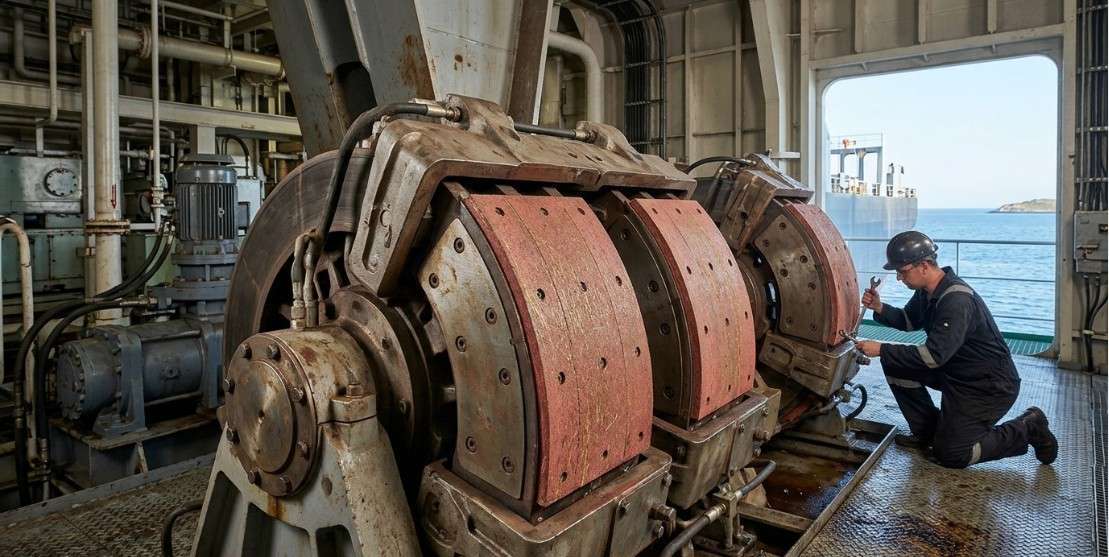
In marine operations, controlling heavy loads and rotating equipment is critical for safety and efficiency. Whether it’s anchoring a vessel, securing it at port, or managing onboard machinery, braking systems must perform reliably under extreme conditions.
At the core of these systems are ship brake liners, specialized friction materials designed to handle immense pressure, heat, and corrosive environments. This guide explains how ship brake liners work, where they are used, the materials involved, and how proper maintenance ensures long-term performance and safety
Ship brake liners are high-friction materials attached to brake shoes or pads in marine braking systems. Their job is simple in concept but critical in practice:
In marine environments, these liners are designed to withstand:
Because ships operate under demanding conditions, marine brake liners are built to be far more durable than standard industrial brake materials.
To understand how they function, it helps to look at the braking process step by step.
Brake liners are either bonded or riveted onto a brake band or shoe. When the brake is engaged, the band tightens around the rotating drum, and the liner presses firmly against its surface.
This contact creates friction, which resists motion and gradually slows down or stops the rotating equipment. The effectiveness of this process depends on the liner’s material and its ability to maintain consistent contact under pressure.
As friction increases, the system converts kinetic energy into heat. The brake liner is specifically designed to absorb and manage this heat, preventing damage to the metal drum and nearby components.
High-quality liners can withstand repeated heat cycles without degrading, ensuring consistent performance. Proper thermal regulation is essential, as excessive heat buildup can lead to brake failure or reduced efficiency.
In mooring and anchoring systems, brake liners play a key role in maintaining tension within ropes or chains. They prevent the winch drum from releasing uncontrollably under external forces such as wind, waves, or strong currents.
By holding the load securely, brake liners help stabilize the vessel during docking or while anchored, ensuring safe and controlled operations.
A crucial safety feature in marine braking systems is load rendering. Instead of locking completely, the brake is designed to slip slightly when tension exceeds safe limits. This controlled slipping prevents sudden snapping of mooring lines or anchor chains, which could otherwise cause serious damage or injury.
The effectiveness of load rendering depends heavily on the brake liner’s friction properties and its ability to perform consistently under extreme stress.
Ship brake liners are part of a larger system that includes:
The performance of a brake liner depends heavily on its material composition. Common types include:
For safer and compliant marine operations, industries are increasingly shifting toward nonasbestos brake lining solutions that ensure reliable performance without compromising environmental standards.
Ship brake liners are used across multiple critical systems:
The most common application. Brake bands lined with friction material wrap around a drum to:
Marine braking systems operate under extreme stress. Without strong brake liners, failures could lead to serious consequences such as:
This is why marine-grade brake liners are designed with strict performance standards.
Common Problems with Ship Brake Liners
Even high-quality liners wear down over time. Some common issues include:
Continuous friction naturally reduces liner thickness.
Excessive heat can cause glazing, reducing friction efficiency.
Oil, grease, or seawater can reduce braking performance.
Poor alignment in brake shoes can cause uneven surface contact.
Worn liners often produce squealing or vibration during braking.
Proper maintenance ensures longer life and safer operation:
Regular maintenance not only improves safety but also reduces costly downtime.
On cargo vessels, anchor winch systems rely heavily on brake liners. When anchoring in deep waters, the brake system must hold thousands of kilograms of chain tension.
If the brake liner is worn or overheating, it may slip—causing the anchor chain to release unexpectedly. This can lead to dangerous drifting or collision risks.
This is why ship engineers prioritize high-quality marine brake linings and schedule routine inspections before every major voyage.
When selecting brake liners for marine use, consider:
Choosing the wrong liner can reduce braking efficiency and increase maintenance costs.
Ship brake liners are essential marine components that generate friction, convert energy into heat, and ensure safe mooring, anchoring, and load control under extreme conditions.
Brake linings create friction by pressing against a rotating drum or disc to slow or stop movement. This friction converts kinetic energy into heat, controlling motion safely.
The 30-30-30 rule refers to applying brakes for 30 seconds, releasing for 30 seconds, and repeating to prevent overheating. It is commonly used in heavy-duty and marine braking systems.
The four main types are organic (NAO), semi-metallic, ceramic, and low-metallic brake pads. Each type varies in durability, heat resistance, and performance.
Brake linings include woven, molded, semi-metallic, and non-asbestos organic types. Each is designed for specific load conditions, heat tolerance, and marine or industrial use.
Ship brake liners are a critical part of marine braking systems, ensuring safe control over heavy loads, rotating drums, and high-tension mooring operations. From generating friction and managing heat to enabling load rendering, their performance directly impacts vessel safety and operational efficiency.
As marine operations continue to demand higher performance and reliability, investing in the right braking components becomes more important than ever. For shipowners, engineers, and industrial buyers looking for dependable, high-performance brake lining solutions, Hamza Fasteners Building Materials Trading LLC delivers trusted products designed for durability, safety, and real-world marine applications.
Contact our marine brake lining experts to get reliable, high-performance solutions tailored for your vessel and heavy-duty applications.
Discover in-depth guides and practical insights to help you make informed decisions across industrial fastening and engineering applications.
November 14, 2024
November 28, 2024
December 14, 2024
December 28, 2024
January 17, 2025
All Rights Reserved © Hamza Fasteners