


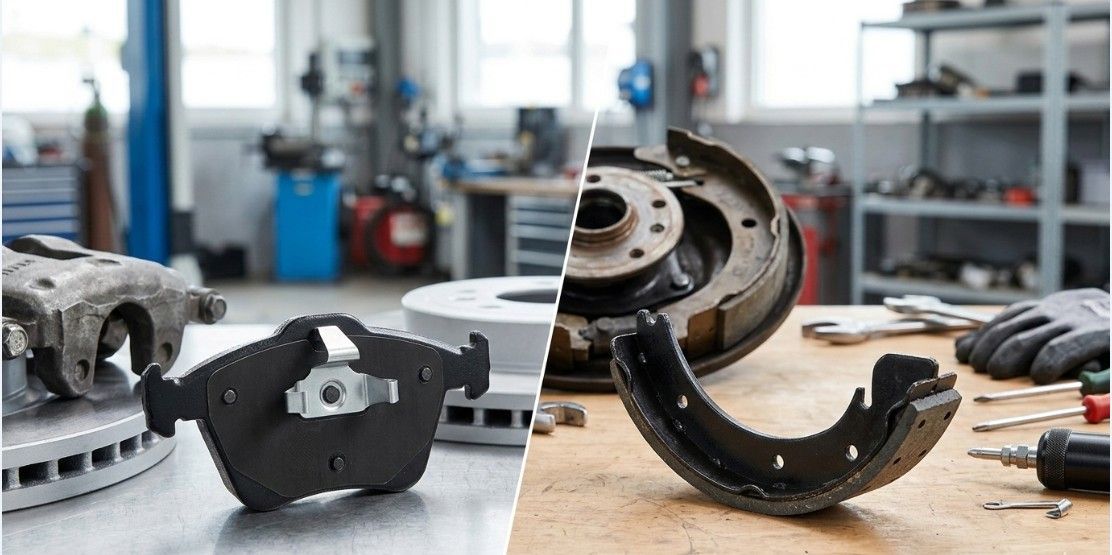
Braking components play a vital role in vehicle safety, equipment reliability, and smart purchasing decisions. Many buyers often ask what the difference is between brake lining and brake pad and why choosing the right one matters for their vehicle or machinery. Understanding these distinctions helps fleet managers, engineers, and procurement teams select friction components that match regional climate conditions, load demands, and performance expectations.
This guide explains their structural differences, use cases, materials, and performance factors so you can confidently select the right component for automotive or industrial needs across the Middle East and Africa markets.
A brake lining is a friction material bonded or riveted onto a metal shoe or band. It presses against a rotating drum or surface to create friction and slow motion.
Brake liners are commonly used in drum brake systems, cranes, hoists, elevators, and heavy industrial machinery where high torque stopping power is required.
Where Brake Linings Are Commonly Used
Heavy load environments in regions such as Dubai and South Africa rely on durable linings due to extreme temperatures and heavy duty operation cycles.
A brake pad is a flat friction plate mounted inside a caliper that presses against a rotating disc rotor. This design provides quick response and efficient heat dissipation.
Passenger vehicles, SUVs, and modern commercial fleets typically rely on disc brake systems because they perform consistently under frequent stopping conditions common in urban traffic.
Uses shoes fitted with brake lining material that expand outward against a drum surface. This design maximizes contact area and torque resistance.
Uses calipers that compress automotive brake pads against a rotor. The open design allows faster cooling and more precise braking control.
These systems are mechanically different, meaning friction components are not interchangeable.
The core distinction lies in design, function, and application environment. Linings are curved and suited for drum mechanisms, while pads are flat and designed for disc systems.
Linings handle higher loads and longer contact duration, whereas pads prioritize quick response, cooling efficiency, and smoother braking.
Brake Lining vs Brake Pad Comparison:
| Feature | Brake Lining | Brake Pad |
|---|---|---|
| System Type | Drum brakes | Disc brakes |
| Shape | Curved, fitted to shoe | Flat, mounted on caliper |
| Primary Use | Heavy vehicles, industrial machinery, cranes | Passenger cars, SUVs, performance vehicles |
| Load Capacity | High – handles heavy torque | Moderate – suited for lighter vehicles |
| Heat Dissipation | Slower, tolerates prolonged friction | Fast, designed for quick stops |
| Durability | Long-lasting in heavy load applications | Wears faster with frequent braking |
| Maintenance | Requires more labor to replace | Easier and faster to replace |
| Regional Consideration | Ideal for hot climates and industrial zones in Middle East & Africa | Ideal for urban traffic and standard vehicles in Gulf countries |
Both components rely on advanced composites engineered for friction stability, thermal resistance, and wear control.
Common friction materials include:
Manufacturers such as Brembo and Bosch invest heavily in friction material research to meet performance and safety standards.
Industry testing often follows protocols from SAE International and International Organization for Standardization to ensure reliability.
Linings tolerate prolonged friction under heavy loads, making them ideal for heavy duty brake lining applications.
Pads dissipate heat faster, which is why performance cars and urban vehicles prefer them.
Industrial linings often last longer due to thicker friction layers and slower wear rates.
Pads typically wear faster but offer superior stopping precision and consistent braking feel.
Replacing pads is faster and cheaper. Replacing linings can be labor intensive because drum systems require more disassembly.
Machines using industrial brake lining must stop large rotating masses safely. Applications include:
Reliability is prioritized over speed of braking response.
Passenger vehicles depend on pads for quick stops, noise reduction, and smoother braking. Urban traffic conditions make responsiveness more important than load capacity.
Choosing between these components is not about preference but compatibility and operating conditions.
Choose brake lining if:
Choose brake pads if:
Even the highest quality component can fail if installed incorrectly. Proper alignment, torque settings, and surface preparation are critical to avoid uneven wear or overheating.
Professional installation is strongly recommended for heavy vehicles and industrial machinery where braking failure could cause costly downtime or safety risks.
Buyers across Middle East and Africa markets should evaluate suppliers carefully due to varying environmental stress factors such as sand, humidity, and extreme heat.
Before purchasing, request:
Working with established suppliers such as Federal-Mogul improves reliability and ensures compliance with international safety standards.
Growing infrastructure, mining expansion, and logistics development across the region are increasing demand for advanced friction solutions. Manufacturers are introducing low dust compounds, smart wear indicators, and eco friendly friction materials.
As transportation electrification expands, braking systems must handle regenerative loads and higher torque profiles, driving innovation in friction material engineering.
This blog is about the key differences between brake lining and brake pad, their materials, performance, and applications, helping buyers in the Middle East & Africa choose safe and durable braking solutions.
Brake pads are for disc systems and provide quick stopping with better heat dissipation. Brake lining is for drum systems and excels in heavy load, high‑torque applications.
The 30 30 30 rule suggests inspecting brakes after 30 driving minutes, 30 stops, or every 30 days to catch wear early. This helps avoid brake fade and maintenance issues.
In high temperatures of Gulf roads, brake pads often wear faster due to heat stress and frequent stops. Premium heat‑resistant pads typically last longer and maintain reliable stopping power.
Heavy loads, rough roads, and heat in many African routes accelerate brake wear on trucks and buses. Industrial linings and heavy‑duty pads are recommended for longer service life.
Choosing the right braking component is essential for safety, efficiency, and long-term reliability. Understanding the difference between brake lining and brake pad, their materials, and suitable applications ensures vehicles and industrial equipment perform optimally under regional conditions. From heat resistance to load capacity, making informed choices prevents downtime and costly repairs.
For industrial operators, fleet managers, and machinery owners across the Middle East and Africa, Hamza Fasteners Building Materials Trading LLC provides a complete range of certified, high-performance brake linings and pads, tailored for local climates and heavy-duty applications.
Contact our brake component specialists to secure materials engineered for safety, durability, and peak operational performance.
Discover in-depth guides and practical insights to help you make informed decisions across industrial fastening and engineering applications.
November 14, 2024
November 28, 2024
December 14, 2024
December 28, 2024
January 17, 2025
All Rights Reserved © Hamza Fasteners