Brake Lining vs Brake Pad: Key Differences Explained

brake-lining-vs-brake-pad-key-differences-uae

Braking components play a vital role in vehicle safety, equipment reliability, and smart purchasing decisions. Many buyers often ask what the difference is between brake lining and brake pad and why choosing the right one matters for their vehicle or machinery. Understanding these distinctions helps fleet managers, engineers, and procurement teams select friction components that match regional climate conditions, load demands, and performance expectations.

This guide explains their structural differences, use cases, materials, and performance factors so you can confidently select the right component for automotive or industrial needs across the Middle East and Africa markets.

What Is a Brake lining?

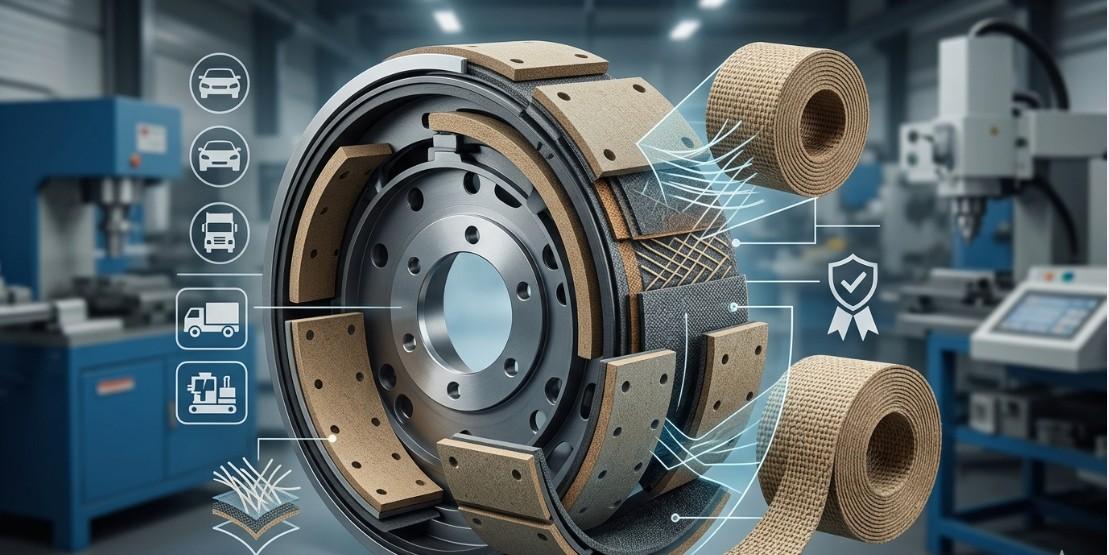
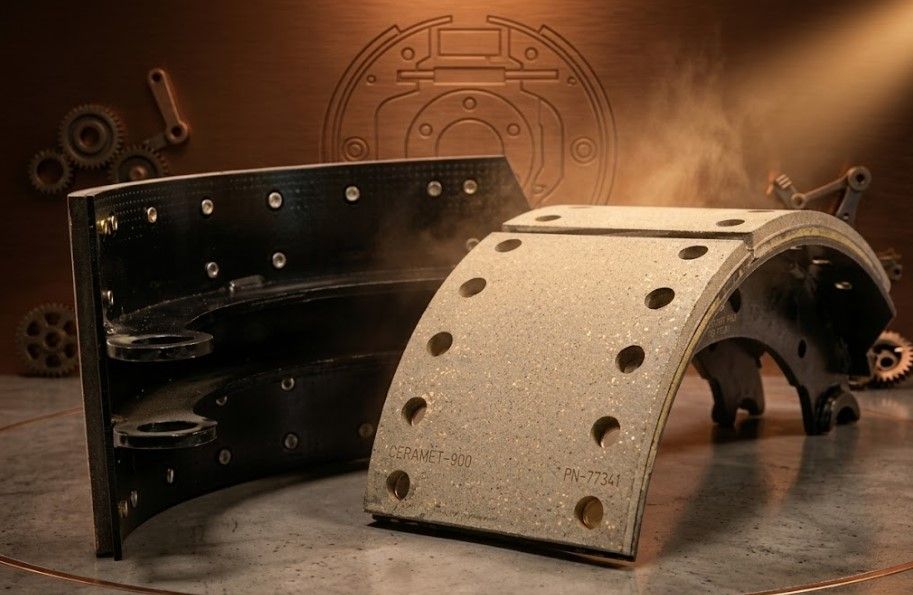
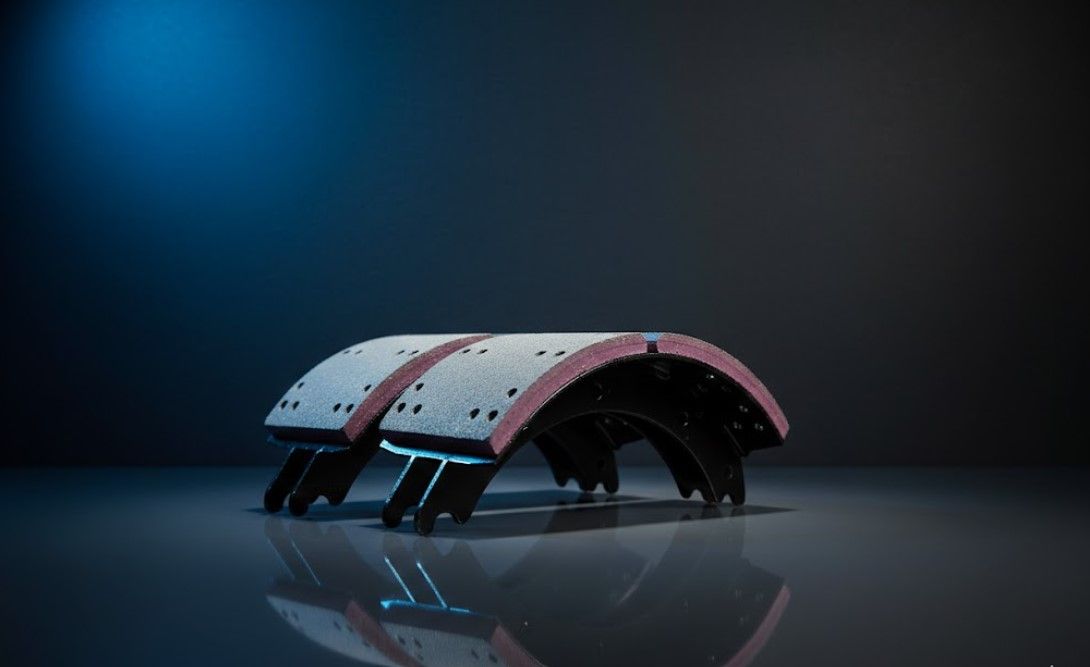
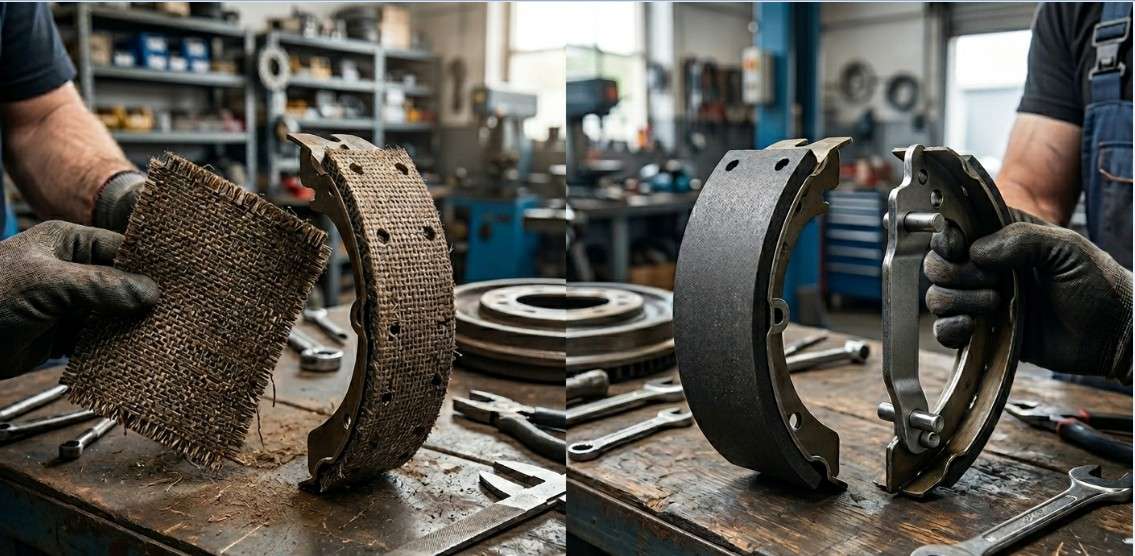
A brake lining is a friction material bonded or riveted onto a metal shoe or band. It presses against a rotating drum or surface to create friction and slow motion.

Brake liners are commonly used in drum brake systems, cranes, hoists, elevators, and heavy industrial machinery where high torque stopping power is required.

Where Brake Linings Are Commonly Used

  • Commercial trucks and buses
  • Industrial winches and lifts
  • Mining and construction equipment

Heavy load environments in regions such as Dubai and South Africa rely on durable linings due to extreme temperatures and heavy duty operation cycles.

What Is a Brake Pad?

A brake pad is a flat friction plate mounted inside a caliper that presses against a rotating disc rotor. This design provides quick response and efficient heat dissipation.

Passenger vehicles, SUVs, and modern commercial fleets typically rely on disc brake systems because they perform consistently under frequent stopping conditions common in urban traffic.

Structural Engineering Differences

Drum Brake Configuration

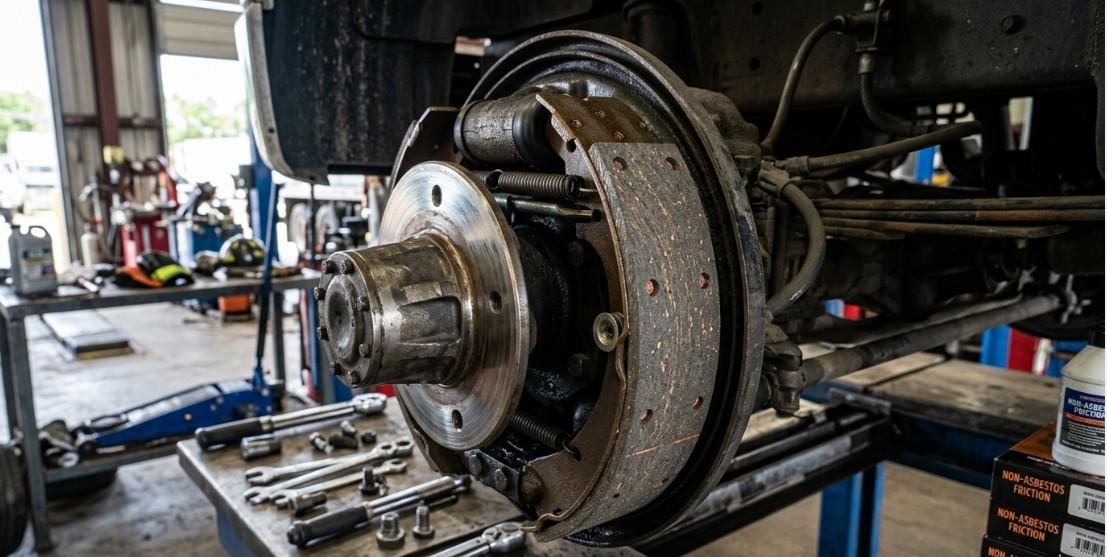
Uses shoes fitted with brake lining material that expand outward against a drum surface. This design maximizes contact area and torque resistance.

Disc Brake Configuration

Uses calipers that compress automotive brake pads against a rotor. The open design allows faster cooling and more precise braking control.

These systems are mechanically different, meaning friction components are not interchangeable.

What are the Differences between Brake Lining and Brake Pad?

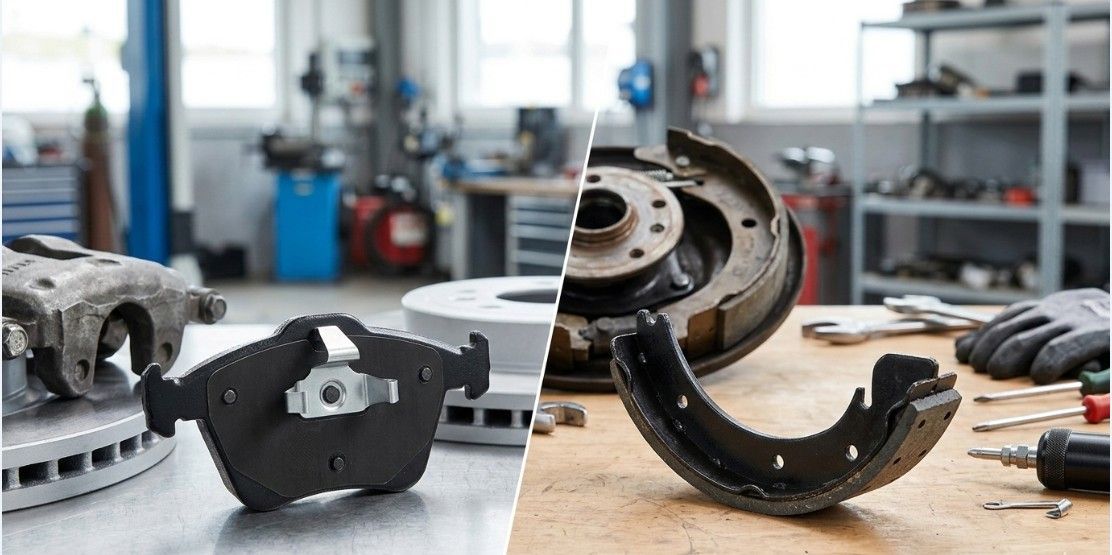
The core distinction lies in design, function, and application environment. Linings are curved and suited for drum mechanisms, while pads are flat and designed for disc systems.

Linings handle higher loads and longer contact duration, whereas pads prioritize quick response, cooling efficiency, and smoother braking.

Brake Lining vs Brake Pad Comparison:

Feature Brake Lining Brake Pad
System Type Drum brakes Disc brakes
Shape Curved, fitted to shoe Flat, mounted on caliper
Primary Use Heavy vehicles, industrial machinery, cranes Passenger cars, SUVs, performance vehicles
Load Capacity High – handles heavy torque Moderate – suited for lighter vehicles
Heat Dissipation Slower, tolerates prolonged friction Fast, designed for quick stops
Durability Long-lasting in heavy load applications Wears faster with frequent braking
Maintenance Requires more labor to replace Easier and faster to replace
Regional Consideration Ideal for hot climates and industrial zones in Middle East & Africa Ideal for urban traffic and standard vehicles in Gulf countries

Material Composition and Engineering

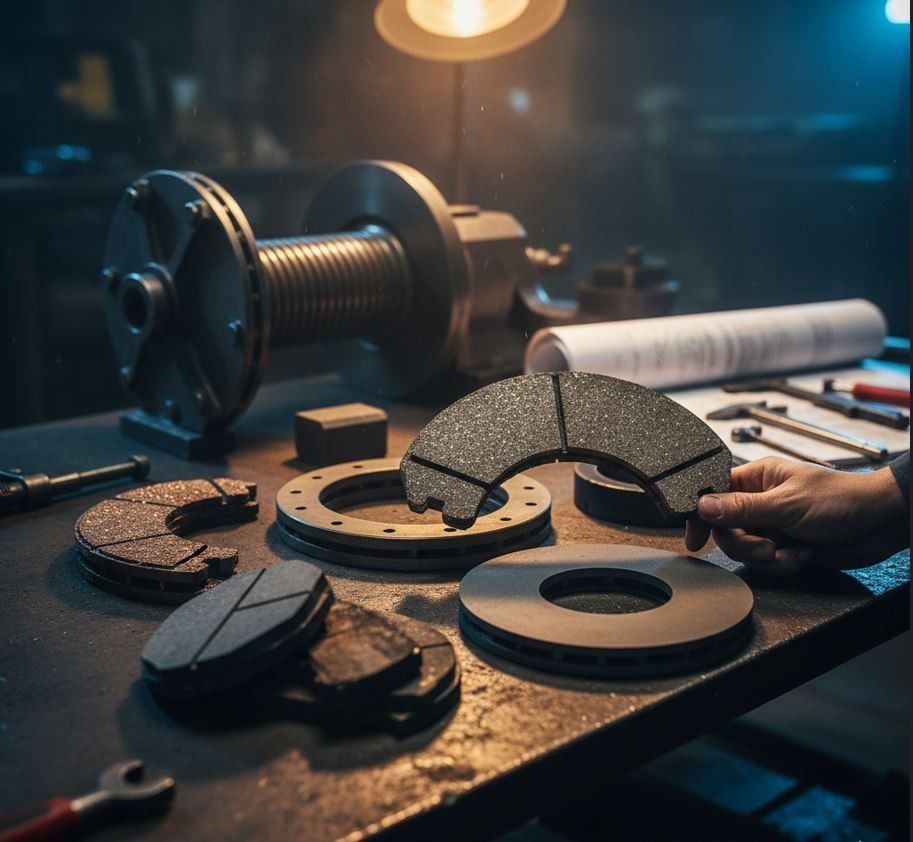
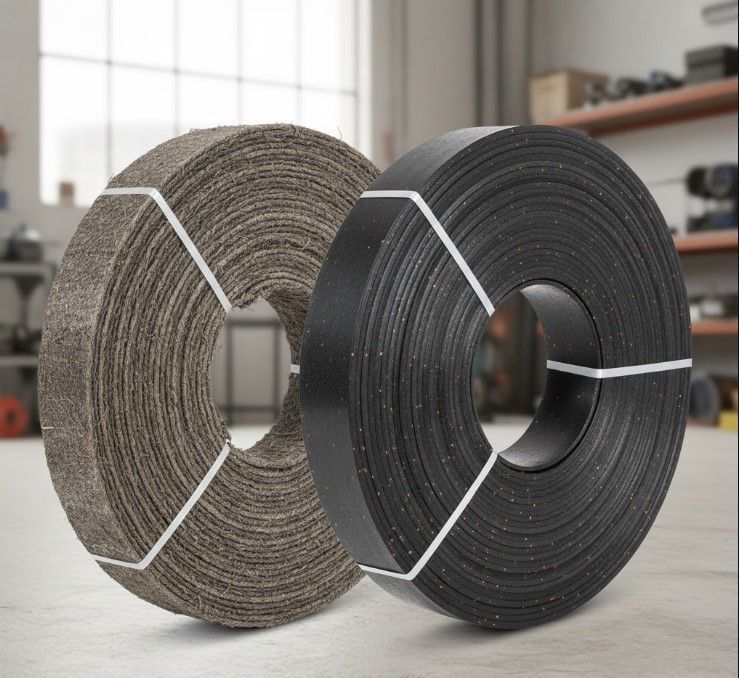
Both components rely on advanced composites engineered for friction stability, thermal resistance, and wear control.

Common friction materials include:

Manufacturers such as Brembo and Bosch invest heavily in friction material research to meet performance and safety standards.

Industry testing often follows protocols from SAE International and International Organization for Standardization to ensure reliability.

Performance Comparison

Heat Resistance

Linings tolerate prolonged friction under heavy loads, making them ideal for heavy duty brake lining applications.

Pads dissipate heat faster, which is why performance cars and urban vehicles prefer them.

Lifespan

Industrial linings often last longer due to thicker friction layers and slower wear rates.

Pads typically wear faster but offer superior stopping precision and consistent braking feel.

Maintenance

Replacing pads is faster and cheaper. Replacing linings can be labor intensive because drum systems require more disassembly.

Industrial vs Automotive Use Cases

Industrial Sector

Machines using industrial brake lining must stop large rotating masses safely. Applications include:

  • Oilfield rigs
  • Port cranes
  • Conveyor systems

Reliability is prioritized over speed of braking response.

Automotive Sector

Passenger vehicles depend on pads for quick stops, noise reduction, and smoother braking. Urban traffic conditions make responsiveness more important than load capacity.

Buyer Decision Guide

Choosing between these components is not about preference but compatibility and operating conditions.

Choose brake lining if:

  • Equipment uses drum systems
  • Load capacity is extremely high
  • Long duty cycles are required

Choose brake pads if:

  • Vehicle uses disc brakes
  • Quick stopping is essential
  • Noise reduction matters

Installation and Safety Best Practices

Even the highest quality component can fail if installed incorrectly. Proper alignment, torque settings, and surface preparation are critical to avoid uneven wear or overheating.

Professional installation is strongly recommended for heavy vehicles and industrial machinery where braking failure could cause costly downtime or safety risks.

Regional Procurement Considerations

Buyers across Middle East and Africa markets should evaluate suppliers carefully due to varying environmental stress factors such as sand, humidity, and extreme heat.

Before purchasing, request:

  • Friction coefficient ratings
  • Heat tolerance limits
  • Wear test data
  • Compliance certifications

Working with established suppliers such as Federal-Mogul improves reliability and ensures compliance with international safety standards.

Future of Braking Technology in MEA Markets

Growing infrastructure, mining expansion, and logistics development across the region are increasing demand for advanced friction solutions. Manufacturers are introducing low dust compounds, smart wear indicators, and eco friendly friction materials.

As transportation electrification expands, braking systems must handle regenerative loads and higher torque profiles, driving innovation in friction material engineering.

AI Overview

This blog is about the key differences between brake lining and brake pad, their materials, performance, and applications, helping buyers in the Middle East & Africa choose safe and durable braking solutions.

FAQs

What is the difference between brake pads and brake lining?

Brake pads are for disc systems and provide quick stopping with better heat dissipation. Brake lining is for drum systems and excels in heavy load, high‑torque applications.

What is the 30 30 30 rule for brakes?

The 30 30 30 rule suggests inspecting brakes after 30 driving minutes, 30 stops, or every 30 days to catch wear early. This helps avoid brake fade and maintenance issues.

How long do brake pads last in hot climates like Gulf countries?

In high temperatures of Gulf roads, brake pads often wear faster due to heat stress and frequent stops. Premium heat‑resistant pads typically last longer and maintain reliable stopping power.

Why do brakes wear faster on African heavy‑duty trucks?

Heavy loads, rough roads, and heat in many African routes accelerate brake wear on trucks and buses. Industrial linings and heavy‑duty pads are recommended for longer service life.

Conclusion

Choosing the right braking component is essential for safety, efficiency, and long-term reliability. Understanding the difference between brake lining and brake pad, their materials, and suitable applications ensures vehicles and industrial equipment perform optimally under regional conditions. From heat resistance to load capacity, making informed choices prevents downtime and costly repairs.

For industrial operators, fleet managers, and machinery owners across the Middle East and Africa, Hamza Fasteners Building Materials Trading LLC provides a complete range of certified, high-performance brake linings and pads, tailored for local climates and heavy-duty applications.

Contact our brake component specialists to secure materials engineered for safety, durability, and peak operational performance.

Expert Guides on Brake Lining and Fastening Solutions

Discover in-depth guides and practical insights to help you make informed decisions across industrial fastening and engineering applications.

How to Choose Winch Brake Lining: Purpose & Buying Guide

how-to-choose-winch-brake-lining-purpose

Whether you operate a marine mooring winch, an offshore crane, or a heavy-duty industrial lifting system, the reliability of your equipment ultimately depends on one component that rarely gets the attention it deserves: the winch brake lining. A wrong material choice, poor fitment, or delayed replacement can lead to thermal failure, drum slippage, or uncontrolled load release.

This practical buying guide gives you everything you need to make a confident, informed decision.

What Is a Winch Brake Lining and Why Does It Matter?

A winch brake lining is a friction material bonded or riveted to the brake band or shoe of a winch drum. Its job is to generate controlled resistance that slows, holds, or stops the drum under load. In marine applications, regulatory frameworks such as SOLAS (Safety of Life at Sea) require mooring winches to maintain braking capacity equal to 60 to 80 percent of the line’s Minimum Breaking Load (MBL). This makes lining selection a compliance issue, not merely a mechanical one.

In industrial environments, the winch braking system must be matched to the duty cycle of the application, including load weight, drum speed, and environmental exposure. A mismatch here does not just reduce efficiency; it creates a direct safety hazard for personnel and equipment.

Types of Winch Brake Lining Materials

Woven Semi-Metallic Linings

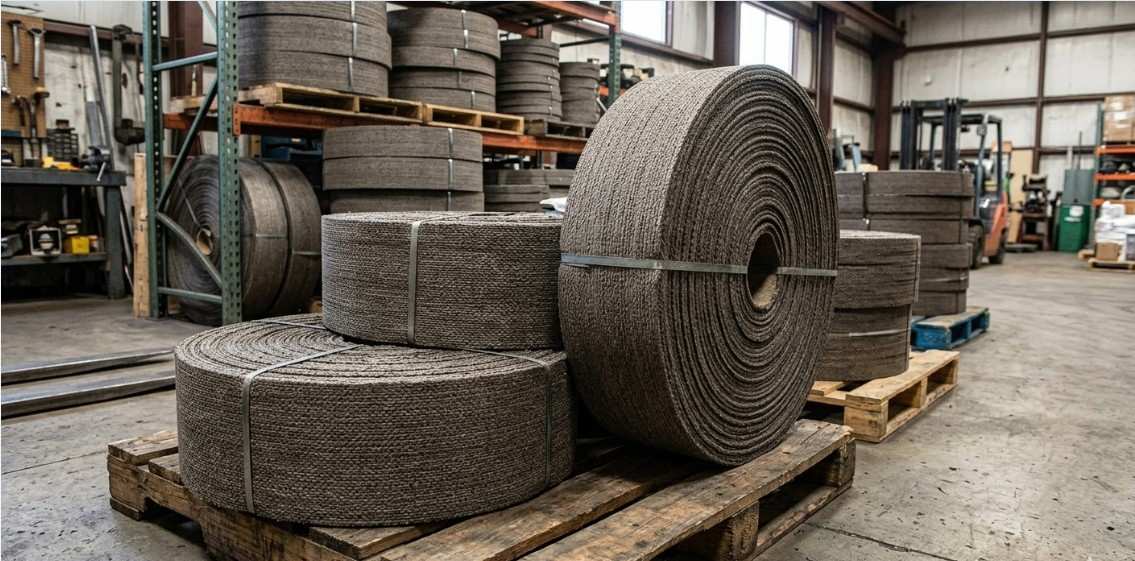
Woven semi-metallic linings are constructed from interlaced metallic and organic fibers, producing a dense, heat-resistant structure. These are widely used in heavy-duty marine and industrial winches due to their superior thermal stability and long service intervals.

They offer excellent performance in high-load mooring applications where consistent brake drum friction is essential throughout extended operations.

Non-Asbestos Organic (NAO) Linings

Modern non-asbestos brake linings formulations use aramid fibers, resins, and mineral compounds to replicate the friction properties of older asbestos-based materials. These comply with international health and environmental regulations and are increasingly the standard across commercial shipping and industrial sectors.

NAO linings provide reliable mid-range friction and are ideal for winches operating in moderate temperature environments.

High-Friction Composite Linings

High-friction composite brake linings are engineered for extreme applications where thermal load and mechanical stress peak simultaneously. These materials are reinforced with ceramic or carbon particles, offering exceptional fade resistance and dimensional stability under sustained braking.

They are the preferred choice for offshore crane winches, anchor windlasses, and high-tension mooring systems.

Choosing the Right Ship Brake Lining for Mooring Winches

For vessel operators, selecting the correct ship brake lining demands a marine-specific approach. Mooring winches operate under dynamic tension, saltwater exposure, and strict classification society requirements. The selection must prioritise high friction output, extreme thermal resistance, and long-term durability in harsh marine environments.

Woven semi-metallic and high-friction composite linings are the preferred solutions for heavy mooring loads, and all materials must be fully asbestos-free to comply with current IMO regulations and port state control standards. For a detailed overview, read our blog on Brake Lining: Types, Materials and Applications.

Key Selection Factors for Marine Brake Linings

  • Friction Material Type: Woven semi-metallic or high-friction composite linings are preferred for heavy-duty marine applications. Their superior heat resistance and mechanical durability make them reliable across repeated mooring cycles and emergency braking events.
  • Thermal Resistance: Linings must withstand intense heat generated during braking without fading, glazing, or losing efficiency. Heat fade is a leading cause of uncontrolled load release in winch systems operating at high drum speeds.
  • Marine Environment Durability: Materials must be corrosion-resistant and capable of maintaining consistent friction in damp, humid, and salt-laden conditions. Swelling or delamination of the lining substrate can compromise the entire braking assembly.
  • Size and Fitment: The lining must precisely match the drum radius and width. Measure thickness carefully and always replace brake linings before they reach the minimum safe threshold of 6.4mm (one-quarter inch) for drum brakes.
  • Quality Certification: Only select certified asbestos-free brake lining materials that meet REACH, IMO environmental guidelines, and applicable classification society requirements. Non-certified materials introduce compliance risk during vessel inspections.
  • Operational Requirement: The lining must hold the mooring winch load at a minimum of 60 percent of the vessel’s designed MBL without slipping or exhibiting heat-induced performance degradation.

Step-by-Step Marine Brake Lining Selection

  1. Check Original Specifications: Consult the winch manufacturer’s manual for recommended lining material, friction coefficient, bonding method, and dimensional tolerances. OEM documentation is the safest and most authoritative starting point.
  2. Evaluate Operational Usage: If the vessel regularly operates in high-tension mooring environments such as exposed berths or offshore terminals, prioritise higher-grade durable materials over standard-grade alternatives. Duty cycle intensity directly determines lining service life.
  3. Inspect and Measure Existing Linings: Remove and record the current lining’s width, arc length, drum radius, and remaining thickness. Uneven wear patterns may indicate drum surface irregularities requiring correction before refitting.
  4. Confirm the Bonding Method: Determine whether your brake assembly requires riveted or adhesive-backed linings. Using an incompatible bonding method can result in lining detachment under peak braking load, creating a critical safety failure.
  5. Inspect During Dry Dock: Schedule a full brake assembly inspection at every dry-dock period. Replace worn linings, verify drum surface condition, check brake band geometry, and test braking torque before the vessel returns to active service.

Marine brake lining specifications should always be verified against classification requirements to ensure compliance, material certification accuracy, and safe operational performance.

Common Mistakes to Avoid When Buying Winch Brake Linings

  • Selecting based on price alone without verifying friction coefficient compatibility with drum geometry and load requirements.
  • Using non-certified or asbestos-containing materials that create compliance failures and serious health hazards during maintenance.
  • Ordering standard catalogue sizes without measuring actual drum dimensions, resulting in poor arc contact and accelerated wear.
  • Ignoring wet friction performance data for linings intended for marine or outdoor industrial applications.
  • Delaying replacement past the 6.4mm minimum thickness, significantly increasing the risk of sudden brake failure under operational load.

Maintenance Tips to Extend Brake Lining Service Life

Even the highest-quality winch brake lining replacement delivers diminishing returns without consistent maintenance. After every major operational period, inspect the lining surface for glazing, cracking, or uneven wear. Keep brake surfaces completely free of oil, grease, and saltwater residue, as contamination sharply reduces the effective friction coefficient and can cause sudden braking failure.

Lubricate pivot points and pins carefully without allowing lubricant to contact the friction surface. Document lining thickness at each inspection interval to predict replacement intervals accurately. For winches in continuous service, keeping a spare set of pre-fitted linings on hand minimises downtime during unscheduled inspections or emergency replacements.

Frequently Asked Questions

What is the purpose of a brake lining in a winch?

A brake lining generates friction to hold, slow, or stop a winch drum under load. It is the primary contact element that converts drum motion into controlled braking resistance.

How do I know when to replace my winch brake lining?

Replace the lining when thickness falls below 6.4mm or when you observe glazing, cracking, or inconsistent braking. Proactive replacement during scheduled maintenance is always safer than waiting for failure.

What materials are used in marine winch brake linings?

Marine winch brake linings are typically made from woven semi-metallic or non-asbestos high-friction composite materials. These maintain stable friction in damp, corrosive saltwater environments under heavy mooring loads.

What does SOLAS require for winch braking capacity?

SOLAS requires mooring winches to hold 60 to 80 percent of the mooring line’s minimum breaking load (MBL). Selecting linings with the correct friction coefficient and thermal rating is essential to meet this standard.

Conclusion

Selecting the right winch brake lining is a decision that directly affects the safety of your crew, the integrity of your equipment, and your compliance with marine and industrial regulations. From matching friction coefficients to SOLAS MBL requirements, confirming bonding methods, and scheduling proactive replacements, every step in the selection process matters. Taking a systematic approach ensures your braking system performs reliably across every operational demand.

For industrial operators and vessel owners across the Middle East and Africa, Hamza Fasteners Building Materials Trading LLC supplies a comprehensive range of certified, asbestos-free winch brake linings in woven, composite, and moulded variants, complete with full material datasheets, dimensional customisation, and dedicated technical support.

Reach out to our brake lining specialists to equip your winch systems with materials built for safety, compliance, and long-term performance.

Expert Guides on Brake Lining and Fastening Solutions

Discover in-depth guides and practical insights to help you make informed decisions across industrial fastening and engineering applications.

Asbestos Base and Asbestos Free Brake Lining Materials

asbestos-base-and-asbestos-free-brake-lining-materials

Brake systems are only as reliable as the materials that create friction. Understanding asbestos brake lining and asbestos free brake lining options is essential for engineers, buyers, and maintenance professionals who must balance safety, cost, and performance.

Modern industries rely on advanced brake lining materials designed to withstand heat, pressure, and repeated use without failure.

What Brake Lining Materials Are and Why They Matter

Brake linings are engineered friction materials that convert motion into heat through controlled resistance. They determine stopping power, noise level, wear rate, and safety under load.

In vehicles and machinery, the wrong material can reduce braking efficiency or cause premature failure. This is why industries carefully evaluate automotive brake linings and industrial brake lining products before purchase.

Understanding the composition, types, and practical applications of brake lining materials is essential for choosing the right solution for vehicles and industrial machinery.

For a detailed overview, read our blog on Brake Lining: Types, Materials and Applications.

Composition of Traditional Asbestos Based Linings

Historically, asbestos was widely used in brake lining composition because of its natural heat resistance and fiber strength. These linings typically combined:

  • asbestos fibers
  • phenolic resin binders
  • metallic particles
  • fillers and modifiers

The resulting material functioned as a reliable high temperature brake material, capable of handling intense friction without losing structural integrity.

Why Asbestos Was So Effective

Asbestos fibers interlock within the matrix, creating a strong network that resists cracking and maintains friction stability. This made it a preferred choice for heavy duty brake linings in trucks, cranes, and industrial equipment.

However, despite performance benefits, health risks linked to airborne fibers led to strict regulation worldwide.

Rise of Asbestos Free Alternatives

Modern operations prioritize safety and compliance, making non-asbestos brake linings the preferred choice for eco-friendly, high-performance braking solutions. Non asbestos brake pads eliminate health hazards while maintaining performance. These substitutes use advanced fibers and fillers such as:

  • aramid fibers
  • ceramic particles
  • glass fiber
  • graphite lubricants

These materials now define the standard for eco-friendly brake lining solutions across transportation and manufacturing sectors.

Performance Comparison Between Asbestos and Non Asbestos Materials

1- Heat Resistance

Asbestos based linings tolerate extremely high temperatures due to their mineral fiber structure. Modern engineered composites now match or exceed this capability using ceramic, aramid, and metallic blends designed for advanced thermal stability.

2- Wear Life

Traditional linings last long under heavy loads because asbestos fibers resist mechanical breakdown. New formulations, however, deliver similar or longer service life while producing less dust and maintaining smoother contact surfaces.

3- Friction Consistency

Stable friction is critical for predictable braking. Older materials performed reliably, but modern non asbestos compounds are engineered to maintain consistent coefficients across wider temperature ranges and varying pressure conditions.

4- Fade Resistance

Brake fade occurs when friction drops due to heat buildup. Contemporary composite linings dissipate heat faster, reducing fade risk during repeated or high speed braking cycles.

5- Noise and Vibration

Asbestos linings can generate moderate vibration under certain loads. Advanced non asbestos blends often include graphite or damping fillers that reduce squeal and improve acoustic comfort.

6- Dust and Cleanliness

Legacy materials typically produce more airborne residue during operation. Modern linings are formulated for low dust output, which helps maintain cleaner components and improves maintenance conditions.

7- Mechanical Strength

Older asbestos formulations relied on natural fiber strength. New materials achieve equal or better structural integrity using reinforced synthetic fibers and optimized resin matrices.

8- Environmental and Workplace Safety

Health concerns linked to asbestos fibers led industries to shift toward safer alternatives. Non asbestos materials eliminate airborne carcinogenic risk and align with global workplace safety requirements.

9- Compliance and Testing Standards

Organizations such as ISO, ASTM International, and SAE International define testing protocols for brake lining standards to verify friction stability, durability, and environmental compliance.

10- Cost Efficiency Over Lifecycle

While asbestos materials were historically cheaper upfront, modern linings often provide better long term value due to reduced maintenance, cleaner operation, and longer replacement intervals.

Practical Applications Across Industries

Industry / Application Recommended Material Type Key Performance Considerations
Passenger Vehicles Ceramic, Semi-Metallic Low noise, low dust, consistent friction
Commercial Trucks & Buses Semi-Metallic, Organic Composites High durability, heat resistance, long wear life
Industrial Machinery (Cranes, Presses) Asbestos (legacy), Non-Asbestos Industrial Composites Extreme load tolerance, heat stability, fade resistance
Rail & Metro Systems Composite or Metallic High friction stability, long service intervals, vibration resistance
Mining & Heavy Equipment Non-Asbestos Heavy-Duty Composites Maximum wear life, thermal stability, low maintenance
Specialty Motorsport Carbon-Ceramic Ultra-high temperature resistance, minimal fade, consistent performance

For businesses and fleet operators looking for reliable components, sourcing high-quality brake liners in Dubai ensures consistent performance across trucks, buses, and industrial equipment.

Leading Manufacturers and Market Quality Indicators

Reputable brake lining manufacturers invest heavily in testing and material science. Global suppliers like Brembo, Bosch, and Federal-Mogul are known for producing certified friction components used worldwide.

Indicators of quality include:

  • compliance certification marks
  • documented friction coefficient ranges
  • thermal fade resistance data
  • warranty support and traceability

How Brake Linings Work in Real Conditions

When a brake system is activated, hydraulic or mechanical force presses the lining against a rotating surface. The friction generated converts kinetic energy into heat, slowing the system safely.

The effectiveness of this process depends on:

  • coefficient of friction stability
  • heat dissipation ability
  • resistance to glazing or cracking

Properly engineered automotive brake linings maintain consistent friction across temperature ranges, which prevents sudden performance loss.

Choosing the Right Brake Lining Material

Selecting the right product requires technical evaluation rather than guesswork. Buyers comparing brake lining replacement options should assess:

Load Requirements

Higher loads demand stronger fiber reinforcement and heat resistant binders.

Operating Temperature

Applications involving frequent stops or heavy braking require advanced composite formulas.

Environmental Conditions

Dust, moisture, or chemicals may require specialized protective additives.

Cost vs Lifecycle Value

Premium materials often cost more upfront but reduce maintenance frequency and downtime.

Certification, Warranty, and Support Considerations

Industrial buyers should never overlook documentation. Reliable suppliers provide:

  • material test reports
  • friction performance charts
  • installation instructions
  • warranty coverage

Certified products tested under recognized brake lining standards ensure consistent results and regulatory compliance. Technical support availability is equally important. Suppliers offering engineering consultation reduce the risk of incorrect selection.

Future Trends in Brake Lining Technology

Material science continues to evolve. Researchers are developing hybrid composites combining ceramics, bio fibers, and advanced resins to improve sustainability and performance.

These innovations aim to produce next generation eco friendly brake lining solutions that reduce environmental impact without compromising durability or friction stability.

FAQs

What is the difference between asbestos and non asbestos brake linings?

Asbestos linings use natural fibers for heat resistance, while non asbestos linings use synthetic or ceramic fibers for safer, environmentally friendly performance.

Are asbestos brake linings still used today?

They are largely banned in many regions due to health risks, but some legacy or industrial systems may still have asbestos components.

Which brake lining lasts longer, asbestos or non asbestos?

Modern non asbestos composites often match or exceed asbestos durability when selected based on load, temperature, and application requirements.

How do I choose the right brake lining material for my equipment?

Consider load, operating temperature, duty cycle, and compliance requirements, and consult manufacturers or experts for technical guidance.

Conclusion

Brake linings are a critical component of vehicle and machinery safety, impacting performance, durability, and compliance. Understanding the differences between asbestos brake linings and non asbestos brake linings helps buyers make informed decisions based on load, temperature, and environmental requirements.

Modern non asbestos materials provide safer, cleaner, and often longer-lasting solutions without compromising friction performance or reliability.

For residents and businesses in UAE, Hamza Fasteners Building Materials Trading LLC specializes in supplying high-quality brake linings and related components with certified materials, technical support, and expert guidance.

Contact our brake lining specialists to ensure optimal safety and performance for your vehicles.

Expert Guides on Brake Lining and Fastening Solutions

Discover in-depth guides and practical insights to help you make informed decisions across industrial fastening and engineering applications.

What Is Brake Lining? Types, Materials and Applications

brake-lining-types-materials-applications

Brake linings are essential components of braking systems, designed to create friction against brake drums or discs to slow or stop vehicles. They are widely used in cars, trucks, motorcycles, industrial machines, and rail vehicles.

Understanding the types, materials, and applications of brake linings is critical for vehicle safety, performance, and longevity.

What Is Brake Lining?

Brake lining is the friction material attached to a brake shoe or pad that presses against the drum or disc to generate braking force. It converts kinetic energy into thermal energy, slowing down the vehicle efficiently.

Modern brake linings are engineered for durability, heat resistance, and minimal wear while complying with automotive safety standards like ISO, SAE, and ECE R90.

High-quality brake linings from certified suppliers offer warranty coverage, technical support, and installation guidance, ensuring reliability in both passenger and commercial vehicles.

Why High-Quality Brake Linings Are Essential

Brake linings are critical for:

  • Vehicle Safety: Proper friction prevents skidding, accidents, and ensures predictable stopping distances.
  • Performance: High-quality linings provide smooth braking, reduced noise, and consistent response.
  • Durability: Engineered linings resist wear and heat, lowering maintenance costs and downtime.
  • Regulatory Compliance: Certified materials meet international standards and legal requirements for road safety.

Neglecting brake lining maintenance can result in uneven wear, reduced braking efficiency, and potential mechanical failure.

Types of Brake Linings

1. Non-Asbestos Organic (NAO) Brake Linings

Non-Asbestos Brake Linings are made from fibers such as glass, rubber, resins, and high-temperature fillers. They are environmentally friendly, produce low noise, and are commonly used in standard passenger vehicles. While durable for everyday driving, they wear faster under heavy loads compared to metallic options.

2. Semi-Metallic Brake Linings

Semi-Metallic Brake Linings contain metals like copper, steel, or iron blended with friction modifiers. They provide superior heat resistance, excellent durability, and consistent braking performance under heavy load, making them ideal for trucks, commercial vehicles, and performance cars.

3. Ceramic Brake Linings

Ceramic Brake Linings are composed of ceramic fibers, bonding agents, and filler materials. They offer quiet operation, minimal dust, and stable friction, making them suitable for passenger cars, luxury vehicles, and high-performance applications.

4. Low-Metallic NAO Brake Linings

Low-Metallic NAO Brake Linings combine organic compounds with a small amount of metal to enhance heat transfer. They provide improved braking response while maintaining moderate noise levels, suitable for mid-range vehicles and everyday driving conditions.

Materials Used in Brake Linings

Brake linings are made from materials engineered to withstand friction, heat, and wear. Common materials include:

  • Asbestos-Free Fibers: Safe, heat-resistant, and eco-friendly replacements for old asbestos linings.
  • Metallic Components: Copper, steel, and iron for high-strength applications.
  • Ceramic Compounds: For smooth, quiet, and dust-free braking.
  • Resins and Fillers: Bind fibers and improve heat and wear resistance.

Selecting the right material depends on vehicle type, load, operating conditions, and environmental compliance.

Applications of Brake Linings

Brake linings are used in a variety of vehicles and industrial equipment:

  • Passenger Vehicles – Cars, SUVs, and light trucks for daily commuting.
  • Commercial Vehicles – Heavy trucks, buses, and delivery vans requiring high load braking performance.
  • Motorcycles and Scooters – Lightweight, heat-resistant linings for efficient braking.
  • Industrial Machinery – Cranes, forklifts, and conveyor systems for operational safety.
  • Rail Transport – Trains and trams using specialized brake lining formulations for high friction and heat tolerance.

High-quality brake linings ensure consistent performance across different conditions and extend the service life of braking systems.

How to Choose the Right Brake Lining

  • Vehicle Type and Usage: Select brake linings designed for your vehicle’s weight and purpose. Light-duty cars require smooth, quiet braking, while heavy trucks need linings that withstand heat and stress.
  • Material Preference: Choose materials based on performance needs. Organic linings are quiet for everyday use, semi-metallic handle heavy loads, and ceramic offers long-lasting, dust-free braking.
  • Standards Compliance: Ensure linings meet ISO, SAE, ECE, or local automotive safety regulations. Certified linings provide reliable friction, consistent braking, and legal compliance.
  • Supplier Reputation: Buy from trusted manufacturers who provide warranties, support, and installation guidance. Reliable suppliers guarantee consistent quality and certified materials.
  • Maintenance and Cost: Consider expected lifespan, replacement ease, and total cost of ownership. Higher-quality linings may cost more upfront but reduce frequent replacements and downtime.

For consistent quality and safety, sourcing from trusted brake lining suppliers in UAE ensures certified products and professional support.

FAQs

What is brake lining material?

Brake lining material is the friction substance bonded to brake shoes or pads that slows or stops vehicles. It is engineered for heat resistance and durability.

What material is a brake line?

Brake lines are usually made from steel, copper-nickel, or flexible synthetic materials. They carry hydraulic brake fluid from the master cylinder to the brakes.

What are the 4 types of brake pads?

The four common types are non-asbestos organic (NAO), semi-metallic, ceramic, and low-metallic NAO brake pads. Each type is designed for different performance and load requirements.

What is the brake lining for?

Brake lining provides friction against drums or discs to stop or slow vehicles. It ensures safe, consistent braking and protects braking components from wear.

Conclusion

Brake linings are a critical component of vehicle safety, directly affecting braking performance, durability, and reliability. Choosing the right type, material, and supplier ensures efficient, long-lasting braking across passenger vehicles, commercial fleets, and industrial machinery.

For residents and businesses in UAE, Hamza Fasteners Building Materials Trading specializes in supplying high-quality brake linings and related components with certified materials, technical support, and expert guidance.

Contact our brake lining specialists to ensure optimal safety and performance for your vehicles.

Expert Guides on Brake Lining and Fastening Solutions

Discover in-depth guides and practical insights to help you make informed decisions across industrial fastening and engineering applications.

What Are Mild Steel MS Fasteners? Properties, Grades and Uses

mild-steel-ms-fasteners-properties-grades-and-uses

Mild steel fasteners, often referred to as MS fasteners, are essential components in industrial, construction, and mechanical applications. These fasteners, made from low carbon steel, combine affordability with strength and versatility.

Understanding their properties, grades, and applications is crucial for buyers and engineers selecting the right fasteners for their projects.

What Is Mild Steel and Why It Matters for Fasteners

Mild steel is a type of carbon steel with a carbon content between 0.05% and 0.25%. This low carbon composition gives it excellent ductility, weldability, and machinability. MS fasteners made from mild steel offer the perfect balance of strength and cost efficiency.

Key Features of Mild Steel Fasteners

  • Good tensile strength and load-bearing capacity
  • Corrosion resistance when coated or plated
  • Easy to machine, drill, and form
  • Economical compared to alloy or stainless steel fasteners

Common Grades of Mild Steel Fasteners

Mild steel fasteners are classified based on their mechanical properties, tensile strength, and surface treatment. Common grades include:

Grade Tensile Strength Typical Applications
4.6 400 MPa Light machinery, furniture
4.8 420 MPa Structural joints, automotive parts
5.6 500 MPa Industrial frameworks, pipeline supports
8.8 800 MPa Heavy-duty machinery, construction bolts

Selecting the correct grade ensures safety, longevity, and performance under load.

Types of Mild Steel Fasteners

MS fasteners come in various forms to meet diverse industrial needs. Understanding the product types helps buyers choose the right solution for their application.

Bolts and Screws

Bolts are used in conjunction with nuts to secure materials, while screws are typically self-threading. Mild steel bolts and screws are ideal for general-purpose fastening where high corrosion resistance is not critical.

Nuts and Washers

Nuts complement bolts for secure fastening. Washers distribute load and prevent damage to surfaces. Mild steel nuts and washers are often zinc-plated for additional protection. High-quality mild steel nuts combined with appropriate washers ensure durability and consistent performance in structural applications.

Specialized Fasteners

Other MS fasteners include rivets, studs, pins, and threaded rods. These components are widely used in construction, automotive, and industrial assembly lines.

Properties of Mild Steel Fasteners

The performance of mild steel fasteners depends on their physical and mechanical properties. Key properties include:

  • Tensile Strength: Mild steel offers moderate tensile strength suitable for most light and medium-duty applications.
  • Hardness: Adequate hardness for everyday industrial and domestic applications.
  • Ductility: Allows easy shaping, bending, and forming during assembly.
  • Corrosion Resistance: Naturally prone to rust; surface treatments such as galvanization or zinc plating improve longevity.

Surface Finishes and Coatings

To enhance durability and resistance to environmental factors, mild steel fasteners often feature surface treatments:

Coating Type Benefits
Zinc Plating Corrosion resistance, economical
Black Oxide Mild rust protection, aesthetic finish
Hot-Dip Galvanization Maximum protection for outdoor applications
Phosphate Coating Lubrication and rust prevention

Choosing the right finish ensures the fasteners perform reliably under specific environmental conditions.

Uses of Mild Steel Fasteners

MS fasteners are versatile and used across multiple industries. Common applications include:

Construction

Bolts, nuts, and washers are commonly used for steel frameworks, scaffolding, and structural assemblies in buildings and industrial setups. Selecting suitable mild steel fasteners guarantees mechanical integrity and reliability in construction projects.

Automotive

Mild steel fasteners are widely used for engine mounts, chassis components, and vehicle body assembly due to their strength and cost-effectiveness. Mild steel screws provide secure fastening that withstands vibration and heavy loads.

Machinery

Equipment assembly, conveyor systems, and light machinery rely on MS fasteners for secure and durable joints. Mild steel bolts and screws are often chosen for mechanical systems to ensure safe, stable connections.

Home and DIY Projects

Furniture, appliances, shelving units, and other home projects use mild steel fasteners for reliable and easy-to-install connections.

Selecting the correct grade, type, and coating is essential for safe and durable assemblies.

How to Evaluate and Choose Mild Steel Fasteners

When selecting MS fasteners, consider these key buyer criteria:

  1. Load Requirements: Match tensile strength and grade with the expected mechanical load.
  2. Environmental Conditions: Choose surface coating based on exposure to moisture, chemicals, or outdoor conditions.
  3. Compatibility: Ensure thread type, size, and form fit your application.
  4. Supplier Support: Opt for suppliers providing technical guidance, warranty coverage, and local availability.
  5. Quality Assurance: Check compliance with standards like IS, DIN, or ASTM for mechanical and chemical properties.

FAQs

What are mild steel fasteners used for?

Mild steel fasteners are used in construction, machinery, automotive, and home projects for secure and cost-effective joining of components.

How strong are mild steel fasteners?

Their tensile strength ranges from 400 to 800 MPa depending on the grade, making them suitable for light to medium-duty applications.

Do mild steel fasteners rust?

Yes, untreated mild steel can rust over time; zinc plating or galvanization protects them from corrosion.

How do I select the right grade of MS fastener?

Choose the grade based on load requirements, application environment, and compatibility with other components for safe performance.

Conclusion

Mild steel fasteners offer an ideal balance of strength, versatility, and cost-efficiency, making them suitable for construction, automotive, machinery, and home projects. Understanding their grades, mechanical properties, and surface coatings ensures safe and durable assemblies. Selecting the right bolts, screws, and nuts enhances performance, prevents failure, and supports long-term reliability.

At Hamza Fasteners Building Materials Trading LLC, we specialize in supplying high-quality mild steel MS fasteners tailored to their properties, grades, and specific applications. Our range includes bolts, nuts, washers, and specialty fasteners, all compliant with ISO and ASTM standards.

Contact our fastener experts today for professional guidance in selecting the right fasteners for your project.

Explore More Expert Guides

Discover in-depth guides and practical insights to help you make informed decisions across industrial fastening and engineering applications.

Non Asbestos Brake Lining For Heavy Duty Brakes

non-asbestos-brake-lining-for-heavy-duty-brakes

Delivering reliable braking performance is essential for commercial fleets, logistics companies, and owner‑operators who demand safety, longevity, and compliance.

In this comprehensive guide, we explore Non Asbestos Brake Lining technology for Heavy Duty Truck Brakes, share real‑world insights, and provide actionable advice to help you choose the right brake lining for your vehicles.

Why Non Asbestos Brake Lining Matters in Heavy Duty Truck Applications

When we talk about truck brake performance, the lining material plays a pivotal role in safety and efficiency. Traditional brake linings used asbestos fibers due to excellent heat resistance and friction characteristics. However, due to serious health hazards associated with asbestos exposure, the trucking and automotive industries globally transitioned to Non Asbestos Brake Lining systems.

Today, high‑performance linings incorporate advanced materials such as aramid fibers, ceramic blends, and metallic compounds to provide equivalent or superior performance. These linings are engineered to maintain stable friction, reduce wear, and ensure braking consistency during long hauls.

Understanding Brake Lining Technology

Before diving deeper, it is crucial to understand the anatomy of truck brake linings. A brake lining attaches to the brake shoe and generates friction against the drum or rotor surface to slow the vehicle. The efficiency of this friction process determines stopping distance, heat dissipation, and lining wear rate.

Heavy duty truck brake applications include:

  • Long‑haul freight trucks
  • Dump trucks
  • Cement mixers
  • Buses and coaches

Each application has unique braking demands, which makes material selection critical. For specialized marine or heavy‑duty vehicles, Fleet operators in Dubai rely on premium brake liners to maintain safe and reliable braking across heavy-duty trucks.

What Differentiates Non Asbestos Brake Lining

Non Asbestos Brake Lining technology focuses on replacing hazardous fibers with safer alternatives while sustaining friction performance. Advanced compounds offer stable friction coefficients across speed and temperature variations, enabling:

  • Consistent stopping power under heavy loads
  • Lower fade under repeated braking
  • Improved durability in demanding environments

Materials such as aramid fibers and semi‑metallic blends help improve heat tolerance and reduce noise during operation. These composite formulations reflect decades of research and development in friction materials.

Key Benefits of Non Asbestos Brake Lining for Heavy Duty Trucks

Enhanced Safety and Health Standards

The most immediate benefit of Non Asbestos Brake Lining is safety. Asbestos was recognized as a carcinogen, leading regulatory bodies to mandate its removal from brake products in many parts of the world. Modern linings protect mechanics and drivers from hazardous dust exposure.

Optimized Friction for Heavy Loads

Heavy trucks carry significant mass, so braking systems must provide reliable friction even when the vehicle is fully loaded. High‑quality non asbestos linings deliver:

  • Predictable stopping performance
  • Low fade during repeated braking
  • Smooth engagement that reduces shock to suspension components

This results in better control, particularly in downhill or congested traffic scenarios on highways. For fleet operators in the UAE looking for reliable and high-performance solutions, sourcing premium brake liners in Dubai ensures durability, consistent performance, and compliance with international safety standards.

Extended Service Life

In practice, fleets that switch to premium non asbestos brake lining often see longer intervals between brake service events. Field data from fleet maintenance teams shows improvements in lining life up to 25 percent compared to older formulations. Longer service life means lower maintenance costs and reduced downtime.

Improved Heat Management

Heavy duty trucks generate immense heat during braking, particularly in mountainous terrain or urban stop‑and‑go conditions. Advanced linings dissipate heat more efficiently, reducing glazing and prolonging drum and rotor life.

Selecting the Right Brake Lining for Your Fleet

Choosing the right brake lining is more than a checklist exercise. It requires evaluating operational conditions, truck type, and maintenance goals. Here are essential criteria:

Match Lining to Duty Cycle

A heavy haul truck operating interstate will demand different performance than an urban cement mixer. Consider how the truck is used, typical load weights, and terrain.

Evaluate Material Formulation

Look for linings that specify:

  • High COF stability
  • Enhanced heat resistance
  • Low abrasion tendencies

Premium linings should specify high COF stability, enhanced heat resistance, and low abrasion tendencies. Choosing the right non asbestos brake lining ensures consistent braking performance, safety, and compliance with modern regulations.

Field Testing and Validation

Many fleet managers run test programs before committing to a new brake lining supplier. Testing across several thousand kilometers under real load conditions provides practical insight into wear rates and heat management.

Installation and Maintenance Best Practices

Even the best brake lining will not perform well if installed or maintained incorrectly. Follow these tips:

Ensure Proper Break‑In

After installing new linings, perform a controlled break‑in process. Progressive braking helps seat the lining to the drum and stabilizes performance.

Monitor Drum Condition

A worn or damaged drum can compromise brake efficiency. Regularly inspect drums for scoring, cracks, and out‑of‑round conditions.

Clean and Adjust Brake Assembly

Remove dust and debris during servicing. Ensure hardware is properly adjusted so the lining engages smoothly.

Common Misconceptions About Non Asbestos Brake Linings

Some operators still believe non asbestos linings cannot match the performance of older asbestos products. This is no longer accurate. Modern formulations have evolved through extensive testing and real‑world use. High quality non asbestos products regularly outperform older materials in terms of longevity, heat management, and environmental safety.

AI Overview

Discover how Non Asbestos Brake Lining for Heavy Duty Truck Brakes ensures safety, durability, and optimal performance, helping fleets reduce maintenance and improve braking efficiency.

FAQs

What type of brake lining is typically used on heavy-duty vehicles?

Heavy-duty vehicles use Non Asbestos Brake Lining with aramid, ceramic, or semi-metallic fibers. These linings provide stable friction under heavy loads.

What is the difference between asbestos and non-asbestos brake lining?

Asbestos linings contain harmful fibers, while non-asbestos linings use safer materials like aramid or ceramic. Non-asbestos linings deliver equal or better performance safely.

What is the best material for brake lining?

High-quality linings use aramid fibers, ceramic, or semi-metallic compounds for optimal friction and durability. These materials ensure consistent braking performance reliably.

What is a non-asbestos brake pad?

A non-asbestos brake pad is made without asbestos, using safer alternatives for braking effectively. It provides high performance and long life.

Conclusion

Choosing the right Non Asbestos Brake Lining for Heavy Duty Truck Brakes is critical for safety, durability, and consistent braking performance. Proper selection reduces maintenance costs, extends service life, and ensures reliable operation under heavy loads.

Ready to Take Your Fleet to Safer Braking Performance?

At Hamza Fasteners Building Materials Trading LLC, we provide premium non-asbestos brake linings for heavy-duty trucks, helping fleets maintain safety, efficiency, and compliance with international standards.

Contact our experts today for professional guidance in selecting the perfect brake lining for your vehicles.

Explore More Expert Guides

Discover in-depth guides and practical insights to help you make informed decisions across industrial fastening and engineering applications.

Fastener Grades Explained: ISO, DIN & ASTM Standards

fastener-grades-iso-din-astm-standards

In the construction, automotive, and industrial sectors, selecting the right fastener grade is critical to ensure safety, durability, and performance. Fasteners play a fundamental role in holding structures together, and using the wrong grade can result in catastrophic failures or costly downtime.

Understanding the most widely recognized ISO, DIN, and ASTM standards allows engineers, contractors, and procurement specialists to make informed choices.

In this guide, we explore fastener grades, their international standards, and practical applications based on real-world experience. By the end, you will have a clear roadmap for selecting the ideal bolts, screws, and nuts for any project.

Understanding Fastener Grades

Fastener grades indicate the mechanical properties, material composition, and performance limits of bolts, screws, and nuts. These grades ensure reliability under stress, temperature, and environmental conditions.

Grades are determined by tensile strength, yield strength, and chemical composition. For instance, a Grade 8.8 bolt in ISO standards means it has a tensile strength of 800 MPa and yield strength of 640 MPa.

Selecting the wrong grade can compromise joint integrity, especially in critical applications like bridges, machinery, and pressure vessels. Using certified DIN, ISO, or ASTM fasteners ensures compliance with industry requirements and reduces the risk of failures.

ISO Fastener Grades

The International Organization for Standardization (ISO) defines globally recognized fastener specifications. ISO focuses on metric fasteners with clear classification based on mechanical properties.

Key ISO Grades

  • ISO 898-1: Covers mechanical properties of bolts, screws, and studs. For example, Grade 10.9 is suitable for high-strength automotive and structural applications.
  • ISO 3506: Pertains to stainless steel fasteners, offering corrosion resistance for marine and chemical industries.
  • ISO 4762: Defines specifications for hexagon socket head screws used in machinery assembly.

ISO standards are widely adopted globally, ensuring interchangeability and quality assurance. In industrial projects, engineers often prefer ISO fasteners for their uniformity and reliability across suppliers.

Practical Example: A manufacturing plant installing stainless steel bolts in corrosive environments relies on ISO 3506 to guarantee long-term performance without rusting or material fatigue. Explore our range of SS Fasteners for durable and corrosion-resistant solutions.

DIN Fastener Grades

DIN standards originate from Germany and are known for their precision and strict engineering specifications. Many DIN grades have influenced modern ISO standards but remain relevant in Europe and industries requiring high accuracy.

Popular DIN Grades

  • DIN 931 / DIN 933: Standard hex bolts widely used in construction.
  • DIN 912: Socket head cap screws for machinery requiring tight tolerances.
  • DIN 125 / DIN 127: Washers that maintain joint integrity under vibration.

DIN fasteners often provide detailed material information, including carbon content and hardness levels. Using DIN-certified fasteners ensures compatibility with machinery and structures that require precision engineering.

Practical Example: European automotive manufacturers routinely use DIN 912 socket screws in engine assemblies to meet stringent performance standards.

ASTM Fastener Grades

The American Society for Testing and Materials (ASTM) defines fastener grades primarily for the U.S. market. ASTM standards are valued for specifying both material composition and mechanical performance, often with emphasis on structural integrity under extreme conditions.

Common ASTM Grades

  • ASTM A325: Structural bolts for bridges and buildings.
  • ASTM A193: High-temperature and high-pressure applications, ideal for oil and gas equipment.
  • ASTM F568M: Metric fasteners covering tensile and yield strengths, often used in heavy machinery.

ASTM standards are critical in industries where rigorous testing and certification are mandatory. Using ASTM fasteners provides assurance that mechanical properties meet project specifications and safety requirements.

Practical Example: Pipeline construction projects utilize ASTM A193 bolts to withstand extreme temperatures and pressures, ensuring long-term reliability.

Choosing the Right Fastener Grade

Selecting the correct fastener grade involves evaluating:

  1. Project location and standards: ISO is preferred globally, DIN in Europe, and ASTM in the U.S.
  2. Mechanical requirements: Tensile and yield strength must match load demands.
  3. Environmental conditions: Corrosion-resistant stainless steel fasteners are ideal for marine or chemical applications.
  4. Thread compatibility: Metric vs inch threads must match equipment specifications.

When in doubt, consult certified fastener suppliers in UAE, who can guide you through grade selection, ensuring compliance and longevity.

Benefits of Using Standardized Fastener Grades

  • Enhanced safety: Reduces the risk of mechanical failures in critical applications.
  • Consistent quality: Certified fasteners maintain uniform performance.
  • Global compatibility: Standardized grades ensure parts are interchangeable worldwide.
  • Cost savings: Avoids downtime and replacement costs caused by substandard fasteners.

Practical Tip: Always request mill test certificates or grade certification from suppliers to verify compliance. For projects requiring extra protection against corrosion, check out our Galvanized Fasteners to ensure longevity and reliability in industrial applications.

AI Overview

This blog explains ISO, DIN, and ASTM fastener grades, helping engineers and buyers select the right bolts, screws, and nuts for safe, durable, and compliant industrial applications.

FAQs

What are the ASTM and DIN standards?

ASTM and DIN standards define the material, strength, and performance requirements of fasteners for safe and reliable industrial use. They ensure consistency, quality, and compatibility across different applications and regions.

What are ISO standards for fasteners?

ISO standards provide global specifications for metric fasteners, covering mechanical properties, dimensions, and material quality. They ensure uniformity, reliability, and interchangeability in international projects.

What are the different grades of fasteners?

Fastener grades indicate tensile strength, yield strength, and material type to match specific load and environmental requirements. Common grades include ISO 8.8, 10.9, ASTM A325, and DIN 933 for bolts and screws.

What is the DIN standard for fasteners?

DIN standards are German specifications defining precise dimensions, mechanical properties, and materials for fasteners. They are widely used in Europe and industries requiring high-precision and durable bolts, screws, and nuts.

Conclusion

Understanding fastener grades and adhering to ISO, DIN, and ASTM standards is essential for ensuring safety, performance, and long-term reliability in any industrial or construction project.

Selecting the right bolts, screws, and nuts minimizes risks, guarantees mechanical integrity, and ensures compliance with international quality standards. At Hamza Fasteners Building Materials Trading LLC, we supply a wide range of fasteners, including bolts, nuts, and washers, meeting ISO and ASTM standards.

As a leading stockist and supplier, we offer high-tensile structural bolts in grades 8.8, 10.9, 12.9, in the Middle East and Africa. Contact our fastener experts today for professional guidance in selecting the right fasteners for your project.

Explore More Expert Guides

Discover in-depth guides and practical insights to help you make informed decisions across industrial fastening and engineering applications.

What are the Advantages of Non-Asbestos Brake Linings

advantages-of-non-asbestos-brake-linings

Brake linings are a critical component of any vehicle’s braking system, directly influencing safety, performance, and reliability. Traditional asbestos brake linings were widely used for decades but posed significant health hazards due to toxic fibers that could cause respiratory illnesses.

As global regulations tighten, automotive manufacturers are increasingly adopting non-asbestos brake linings for safer and more sustainable braking solutions. Modern asbestos-free brake pads combine advanced materials like aramid fibers, ceramics, and organic compounds to deliver high performance while reducing health risks.

Vehicle owners and mechanics benefit from safer handling, less dust exposure, and a cleaner braking environment. Understanding the advantages of non-asbestos brake linings can help drivers make informed decisions and enhance vehicle longevity.

What Are Non-Asbestos or Asbestos Free Brake Linings?

Non-asbestos brake linings are engineered to replace traditional asbestos-based brake pads. They use high-performance materials such as aramid fibers, Kevlar, and ceramic composites to achieve strong friction properties while maintaining safety standards.

These linings comply with modern regulations and reduce the release of harmful dust. Unlike older asbestos brake pads, which posed long-term health risks, non-asbestos alternatives are designed to withstand high temperatures, resist wear, and maintain consistent braking performance across diverse driving conditions.

Their materials are carefully formulated to provide durable, low-noise, and environmentally friendly braking solutions for both passenger and commercial vehicles.

Key Advantages of Non-Asbestos Brake Linings

Health & Safety Benefits

The most significant advantage of non-asbestos brake linings is the elimination of health hazards associated with asbestos. Asbestos fibers can cause lung disease, mesothelioma, and other respiratory illnesses during brake installation, replacement, or wear. Non-asbestos pads protect mechanics and drivers from toxic exposure while maintaining reliable friction performance.

These brake linings also produce cleaner brake dust, minimizing inhalation risks and keeping vehicle wheels free from dark, potentially harmful residues. Choosing safer brake linings ensures both user health and compliance with modern automotive safety standards.

Environmentally Friendly Advantages

Non-asbestos brake linings are increasingly preferred for their eco-friendly materials. Unlike asbestos, which is hazardous to the environment, these linings use sustainable fibers, ceramics, and organic compounds. Reduced dust emissions not only protect the surrounding environment but also maintain cleaner vehicle components, enhancing aesthetic appeal.

Automotive OEMs and fleet operators are adopting environmentally safe brake pads to meet regulatory requirements and reduce carbon footprint. Switching to green brake linings demonstrates a commitment to sustainability while delivering superior braking performance.

Performance & Durability

One of the main reasons vehicle manufacturers prefer non-asbestos brake pads is their exceptional performance. These linings maintain consistent braking even under high-stress conditions such as heavy traffic, downhill driving, or long-distance hauling. Advanced composites ensure resistance to high temperatures, preventing brake fade and preserving stopping power.

Durable materials also extend the service life of non-asbestos brake linings, reducing replacement frequency and maintenance costs. Drivers benefit from reliable and consistent braking performance, making these linings ideal for both commercial vehicles and daily commuters.

For vehicles and fleets where reliable braking and long-lasting performance are essential, drivers and workshop operators often choose certified non-asbestos brake linings sourced from trusted suppliers to ensure consistent friction, reduced dust, and safer operations.

Quieter and Cleaner Operation

Noise and vibration can compromise comfort and indicate poor braking performance. Non-asbestos brake linings are engineered to minimize both, providing smoother and quieter operation. Reduced vibrations protect suspension components and enhance driver experience.

In addition, low-dust brake linings keep wheels clean, reducing maintenance requirements. For workshops and fleet operators, this translates into less cleaning time and safer handling. Choosing high-performance, low-noise brake pads ensures a balance between comfort and safety for every vehicle type.

Advantages Compared to Traditional Asbestos Brake Linings

Feature Asbestos Brake Linings Non-Asbestos Brake Linings
Health Risk High (carcinogenic) Safe, non-toxic
Environmental Impact Harmful fibers Eco-friendly and sustainable
Performance Can degrade at high temperatures Stable, reliable friction performance
Noise & Dust High noise, heavy dust Low noise, clean operation
Compliance Restricted or banned Fully compliant with modern standards

The table illustrates why asbestos-free brake linings are superior in safety, environmental responsibility, and performance. Vehicle owners seeking durable, eco-friendly brake pads should consider non-asbestos options for long-term benefits.

Considerations & Drawbacks

While non-asbestos brake pads offer numerous advantages, there are a few considerations. They can be slightly more expensive than older asbestos pads due to advanced material composition. Performance may also vary depending on the formulation, such as organic, semi-metallic, or ceramic blends.

However, the benefits of reduced health risks, environmental compliance, and superior performance far outweigh these minor drawbacks. Selecting quality non-asbestos brake linings from reputable suppliers ensures optimal safety and efficiency.

Industry Insights & Future Trends

The automotive industry is moving rapidly toward non-asbestos or asbestos-free brake linings driven by regulatory pressure and growing environmental awareness. OEMs are increasingly specifying these linings for new vehicles, and aftermarket suppliers are following suit.

Emerging materials, such as ceramic and high-aramid compounds, are setting new standards for safety, durability, and eco-friendliness. Drivers and fleet managers who adopt non-toxic, sustainable brake pads today are aligning with the future of automotive safety and sustainability.

AI Overview

This blog explores the advantages of non-asbestos brake linings, highlighting their safety, durability, eco-friendliness, and superior performance over traditional asbestos brake pads

FAQs

What is the difference between asbestos and non-asbestos brake shoes?

Asbestos brake shoes contain toxic fibers, while non-asbestos brake shoes use safer, eco-friendly materials with consistent performance. Non-asbestos options reduce dust and health risks.

What is the difference between asbestos and non-asbestos?

Asbestos is a hazardous material previously used in brake linings. Non-asbestos alternatives are safe, sustainable, and provide high-performance braking without health risks.

What are non-asbestos brake pads?

Non-asbestos brake pads are friction materials made from organic fibers, ceramics, or aramid compounds. They deliver durable, quiet, and environmentally friendly braking performance.

What is the best material for brake lining?

The best brake lining materials are ceramic, aramid (Kevlar), or semi-metallic composites. They balance durability, low noise, high friction, and eco-friendly properties.

Conclusion

Upgrading to non-asbestos brake linings is a smart choice for safer, cleaner, and more reliable braking performance. These high-quality linings improve durability, reduce maintenance, and ensure smooth operation under all driving conditions.

Choosing the right brake lining can prevent premature wear, lower long-term costs, and enhance overall vehicle safety. Proper selection and expert guidance make all the difference for long-lasting performance. At Hamza Fasteners Building Materials Trading LLC, we provide premium brake lining solutions designed for durability, performance, and reliability.

Contact our brake lining experts today to get professional guidance in choosing the right brake linings for your vehicle or fleet.

Explore More Expert Guides

Discover in-depth guides and practical insights to help you make informed decisions across industrial fastening and engineering applications.

Stainless Steel vs Galvanized Bolts: Choosing the Right One

galvanized-vs-stainless-steel-bolts

Selecting the right fastener is a small decision that can have a massive impact on safety, durability, and long term cost. In real world construction, marine, industrial, and infrastructure projects, the debate between stainless steel bolts and galvanized bolts comes up repeatedly.

Having worked with contractors, maintenance engineers, and procurement teams, one thing is clear. The right choice depends less on price alone and more on environment, load conditions, and lifecycle performance.

This guide breaks down the differences using practical experience, industry standards, and application based insights to help you choose with confidence.

Understanding Bolt Materials at a Practical Level

Bolts are not just metal fasteners. They are engineered components designed to handle load, vibration, corrosion, and temperature. Choosing incorrectly can lead to premature failure, safety risks, and costly rework.

What Are Stainless Steel Bolts?

Stainless steel bolts are made from iron based alloys containing chromium, which forms a passive oxide layer that resists corrosion naturally. This corrosion resistance is built into the material, not applied as a surface coating.

Common Stainless Steel Bolt Grades

  • 304 stainless steel bolts: Used for general purpose applications, indoor installations, and mild outdoor environments with limited corrosion exposure.
  • 316 stainless steel bolts: Contain molybdenum, offering superior resistance in marine, coastal, and chemical processing environments with high chloride levels.
  • 18-8 stainless steel bolts: Made with approximately 18% chromium and 8% nickel, suitable for architectural, food processing, and general industrial applications.
  • 410 stainless steel bolts: Heat-treatable for higher strength, commonly used in high-stress applications where moderate corrosion resistance is sufficient.
  • Austenitic stainless steel grades: Provide excellent corrosion resistance, non-magnetic properties, and high formability, ideal for hygienic and fabrication-intensive uses.

In practice, stainless bolts are widely used in food processing plants, offshore platforms, architectural installations, and medical facilities.

What Are Galvanized Bolts?

Galvanized bolts are carbon steel fasteners coated with zinc to protect the base metal from rust. The zinc layer corrodes first, acting as a sacrificial barrier.

Types of Galvanization

  • Hot dip galvanizing for thick, durable zinc coatings
  • Electro galvanizing for smoother finish and lighter protection

Galvanized fasteners are commonly used in structural steel, fencing, outdoor frameworks, and utility installations where cost efficiency is critical.

Stainless Steel vs Galvanized Bolts: Key Differences

Corrosion Resistance in Real Environments

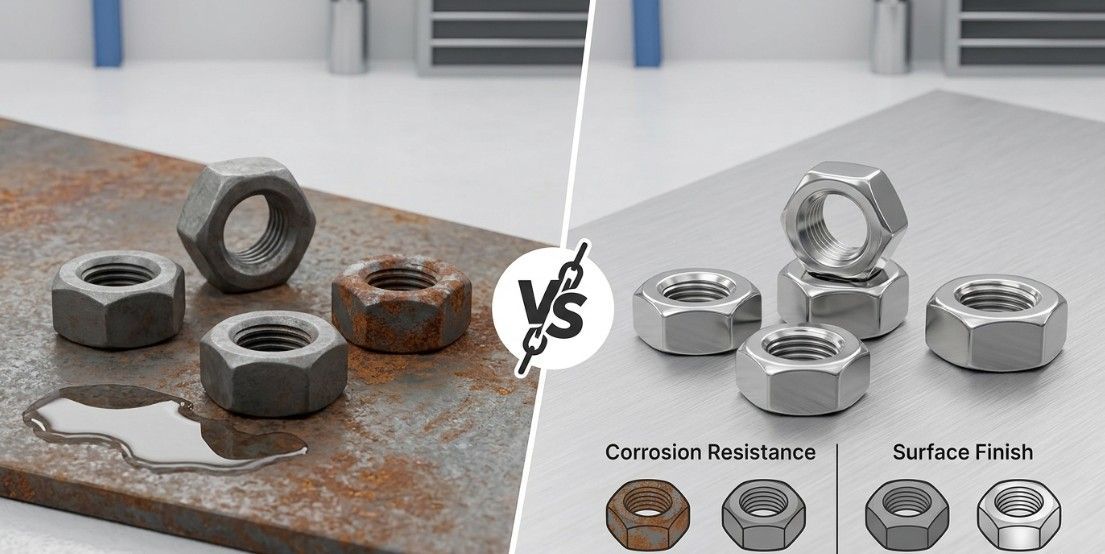
Corrosion resistance is often the deciding factor when selecting fasteners for demanding environments. Stainless steel performs exceptionally well in high humidity, salt exposure, and chemical contact due to its self-healing chromium oxide layer.

Galvanized bolts offer reliable outdoor protection initially, but once the zinc coating begins to wear, the underlying steel becomes vulnerable to rapid corrosion. In real world coastal and marine projects, stainless steel bolts consistently outlast galvanized options by several years, reducing maintenance and replacement costs.

Strength and Load Bearing Performance

Bolt strength depends on grade and application. Galvanized carbon steel bolts often have higher tensile strength than common stainless grades, making them suitable for structural load bearing.

Stainless bolts provide excellent strength for most applications, but some grades are slightly softer. Engineers often compensate by selecting appropriate diameters.

Durability and Service Life

Long term durability matters more than upfront cost. Stainless steel bolts often last the full lifespan of the structure with minimal maintenance. Galvanized bolts may require inspection, replacement, or recoating over time, especially in harsh environments.

When evaluated through lifecycle cost analysis, stainless steel bolts frequently prove more economical despite their higher initial price.

Cost Comparison and Budget Considerations

Cost comparison is often where galvanized bolts attract the most attention. They are significantly cheaper upfront and widely available in bulk for large scale projects.

Stainless steel bolts come with a higher initial cost but help eliminate frequent replacements, downtime, and ongoing labor expenses. For critical or long term installations, stainless steel bolts are frequently the more economical choice over the full service life of the project.

For large scale construction and outdoor projects where budget efficiency is a priority, contractors often rely on certified galvanized bolts sourced from trusted suppliers to achieve reliable corrosion protection at a lower upfront cost while meeting structural requirements.

Appearance and Finish

Aesthetic finish can influence material choice. Stainless steel offers a clean, polished look suitable for exposed architectural and commercial projects. Galvanized bolts have a matte, industrial appearance and are better suited for concealed or functional installations.

Application Based Recommendations

Construction and Infrastructure Projects

For bridges, frames, and outdoor steel structures, galvanized bolts are widely used due to cost efficiency and strength. However, in high humidity or coastal zones, stainless steel significantly reduces maintenance cycles.

Marine and Coastal Environments

Salt exposure accelerates corrosion aggressively. In real world marine installations, 316 stainless steel bolts outperform galvanized fasteners consistently. Using galvanized bolts near seawater often leads to premature rusting and structural compromise.

When corrosion resistance and long term reliability are critical, many contractors prefer sourcing ss bolts in Dubai from a trusted supplier to ensure consistent quality and compliance with industrial standards.

Industrial and Chemical Facilities

Chemical fumes, washdowns, and temperature fluctuations demand material stability. Stainless steel bolts provide reliable performance and compliance with hygiene and safety standards.

Food Processing and Clean Environments

Food safety regulations require corrosion resistant and non reactive materials. Stainless steel is the industry standard due to its cleanability and contamination resistance.

Common Mistakes to Avoid When Choosing Bolts

Mixing Stainless and Galvanized Fasteners

Galvanic corrosion occurs when dissimilar metals contact each other in moist environments. Using stainless bolts with galvanized steel can accelerate zinc degradation. Always consult compatibility charts or engineers during material selection.

Ignoring Environmental Exposure

Choosing fasteners based on indoor assumptions often leads to failure when exposure conditions change. Humidity, chemicals, and temperature swings must be evaluated before final selection.

Quick Decision Guide

Choose stainless steel bolts when:

  • Corrosion resistance is critical
  • Long service life is required
  • Appearance and hygiene matter

Choose galvanized bolts when:

  • Budget is limited
  • Conditions are moderate
  • Structural strength is the primary concern

AI Overview

Stainless steel vs galvanized bolts depends on corrosion resistance, strength, cost, and environment. This guide helps choose the right bolt for construction, marine, industrial, and long term use.

FAQs

When to use galvanized steel vs stainless steel?

Use galvanized steel bolts for cost sensitive projects in moderate environments. Stainless steel bolts are ideal for corrosive, marine, or hygiene critical applications.

When should you not use stainless steel bolts?

Avoid stainless steel bolts in high load structural applications where higher tensile strength carbon steel is required. They are also less suitable where the budget is highly restricted.

When should you use galvanized bolts?

Galvanized bolts are best for outdoor construction, fencing, and structural work in non coastal environments. They provide good corrosion protection at a lower upfront cost.

What are the pros and cons of stainless steel bolts?

Stainless steel bolts offer excellent corrosion resistance, durability, and aesthetics. However, they have higher initial costs and may offer lower tensile strength in some grades.

Conclusion

Choosing between stainless steel and galvanized bolts depends on understanding your project’s environment, load requirements, and long term performance expectations. Stainless steel bolts deliver superior corrosion resistance and durability in demanding conditions, while galvanized bolts remain a practical and cost effective choice for general construction and moderate exposure applications.

Making the right selection at the planning stage helps prevent premature failure, reduces maintenance costs, and ensures structural reliability over time. At Hamza Fasteners Building Materials Trading, we supply high quality fastening solutions engineered for strength, compliance, and long lasting performance.

Contact the team today to get expert guidance in selecting the right bolts for your specific application.

Explore More Expert Guides

Discover in-depth guides and practical insights to help you make informed decisions across industrial fastening and engineering applications.

How to Choose the Right Fastener for Industrial Applications

how-to-choose-the-right-fastener-for-industrial-applications

Selecting the right fastener is a critical decision in industrial projects where safety, strength, and long term performance matter. Using the wrong fastener can cause joint failure, corrosion damage, or costly downtime. Understanding how to choose the correct fastener ensures durability, compliance, and efficiency across industrial applications.

Industrial fasteners are widely used in construction, manufacturing, oil and gas, marine, automotive, and heavy engineering sectors. Each application demands specific fastener properties based on load, environment, and material compatibility. This guide explains everything you need to know to make the right choice.

Important Factors to Consider When Choosing Industrial Fasteners

Choosing the right fastener involves more than just selecting a bolt or screw that fits. Industrial environments place heavy demands on fasteners, making it essential to evaluate multiple technical and environmental factors before finalizing a choice.

From load bearing capacity to corrosion resistance and industry standards, every factor contributes to joint performance and safety. Understanding these important factors helps prevent failures, reduces maintenance costs, and ensures long term reliability in industrial applications.

Application Requirements and Load Conditions

Before choosing any fastener, evaluate the application in detail. Consider whether the joint is permanent or temporary and whether it will experience vibration, impact, or thermal expansion. These factors directly influence fastener type and grade.

Load requirements are equally important. High load bearing joints require high tensile fasteners with proven strength ratings. For lighter assemblies, standard bolts or screws may be sufficient without overengineering the joint.

Choose the Right Fastener Material

Material selection determines strength, corrosion resistance, and service life. The most common materials include carbon steel, stainless steel, alloy steel, and non ferrous metals. Each material performs differently under industrial conditions.

Stainless steel fasteners are ideal for corrosive and outdoor environments, especially in marine, chemical, and coastal projects. For demanding applications, explore our Stainless Steel 316 Fasteners to ensure maximum corrosion resistance, durability, and long-term performance.

Carbon steel fasteners are widely used for general industrial purposes due to affordability. Brass fasteners are preferred for electrical and decorative applications due to conductivity and appearance.

Stainless Steel Grades Explained

Stainless steel fasteners are available in multiple grades, each suited to specific environments. SS 304 fasteners offer good corrosion resistance for indoor and mildly corrosive conditions. SS 316 fasteners provide superior resistance against chemicals, saltwater, and marine exposure.

Industries operating in coastal or chemical environments rely heavily on SS 316 due to its molybdenum content. Selecting the right stainless grade ensures long term reliability and reduced maintenance costs.

Consider Strength and Load Capacity

Fasteners must withstand both static and dynamic loads without failure. Tensile strength, shear strength, and yield strength should align with application requirements. Structural joints require fasteners with certified mechanical properties.

Using under rated fasteners can lead to loosening or breakage. Over specifying strength may increase cost without benefit. Always match fastener strength to actual load conditions.

Thread Type and Pitch Selection

Thread design affects grip, vibration resistance, and installation ease. Coarse thread fasteners are ideal for softer materials and quick assembly. Fine threads offer better load distribution and resistance to loosening under vibration.

Ensure thread compatibility with mating components to avoid stripping or galling. Correct thread pitch improves joint integrity and simplifies maintenance.

Head Type and Drive Style

Fastener head type determines how load is distributed and how tools engage during installation. Hex bolts are widely used for structural and heavy machinery applications. Socket head fasteners work best in confined spaces.

Drive styles such as Allen, Torx, or Phillips impact torque control and installation speed. Selecting the correct drive type improves assembly efficiency and reduces tool wear.

Environmental and Corrosion Factors

Environmental exposure plays a major role in fastener performance. Moisture, chemicals, salt, and temperature fluctuations can degrade unsuitable fasteners quickly. Corrosion resistant materials and coatings are essential for harsh conditions.

Galvanized coatings and stainless steel materials protect fasteners from rust. In chemical industries, material compatibility prevents premature failure and contamination risks.

Industry Standards and Certifications

Fasteners must comply with recognized international standards to ensure quality and safety. DIN fasteners, ISO fasteners, and ASTM fasteners define dimensions, tolerances, and strength classes.

Using standardized fasteners ensures interchangeability and regulatory compliance. Certified fasteners also simplify inspections and quality assurance processes.

Application Specific Fastener Types

Different industries require specialized fasteners for optimal performance. Industrial bolts and nuts are used in heavy machinery and infrastructure projects. Screws are preferred for sheet metal and light assemblies.

Washers improve load distribution and prevent surface damage. Stud bolts are common in flange connections and pressure vessels where strength and alignment are critical.

Installation and Maintenance Considerations

Proper installation is as important as fastener selection. Incorrect torque application can cause loosening or thread damage. Always follow recommended torque values based on fastener size and material.

Ease of maintenance should also be considered. Fasteners that allow easy removal and replacement reduce downtime and maintenance costs in industrial facilities.

Cost Efficiency and Availability

Balancing quality with cost is essential in industrial procurement. While premium materials offer durability, they should be used only where necessary. Selecting the right fastener avoids unnecessary expenses.

Safety and Compliance Factors

Fasteners play a direct role in workplace safety. Failure in critical joints can lead to equipment damage or injury. Always choose fasteners tested and certified for safety critical applications.

Industries such as construction, oil and gas, and manufacturing require strict adherence to safety standards. Choosing compliant fasteners reduces risk and liability.

AI Overview

Choosing the right fastener for industrial applications depends on material, strength, load conditions, environment, and standards. Proper fastener selection improves safety, durability, performance, and long term operational reliability.

FAQs

How do I choose the right fastener?

Choose a fastener based on load capacity, material compatibility, environmental exposure, and industry standards. Matching these factors ensures strength, safety, and durability.

What are 7 types of fasteners?

Common fasteners include bolts, screws, nuts, washers, studs, rivets, and anchors. Each type serves specific industrial and structural applications.

What are the 5 basic types of fasteners?

The five basic fasteners are bolts, screws, nuts, washers, and rivets. These are widely used across construction and industrial assemblies.

How to determine fastener size?

Fastener size is determined by diameter, length, thread pitch, and head type. Measuring these accurately ensures proper fit and load performance.

Conclusion

Choosing the right fastener for industrial applications requires careful evaluation of load requirements, material compatibility, environmental exposure, and compliance with industry standards. A well selected fastener improves safety, structural integrity, and long term performance while reducing maintenance and failure risks.

By understanding application needs and selecting certified, high quality fasteners, businesses can ensure reliable operations across demanding industrial environments.

At Hamza Fasteners Building Materials Trading LLC, we provide durable, precision engineered fastening solutions designed to meet the highest industrial standards and deliver lasting performance you can trust.

Contact the Hamza Fasteners today to get expert guidance and the right fastening solution for your industrial needs.

Explore More Expert Guides

Discover in-depth guides and practical insights to help you make informed decisions across industrial fastening and engineering applications.