


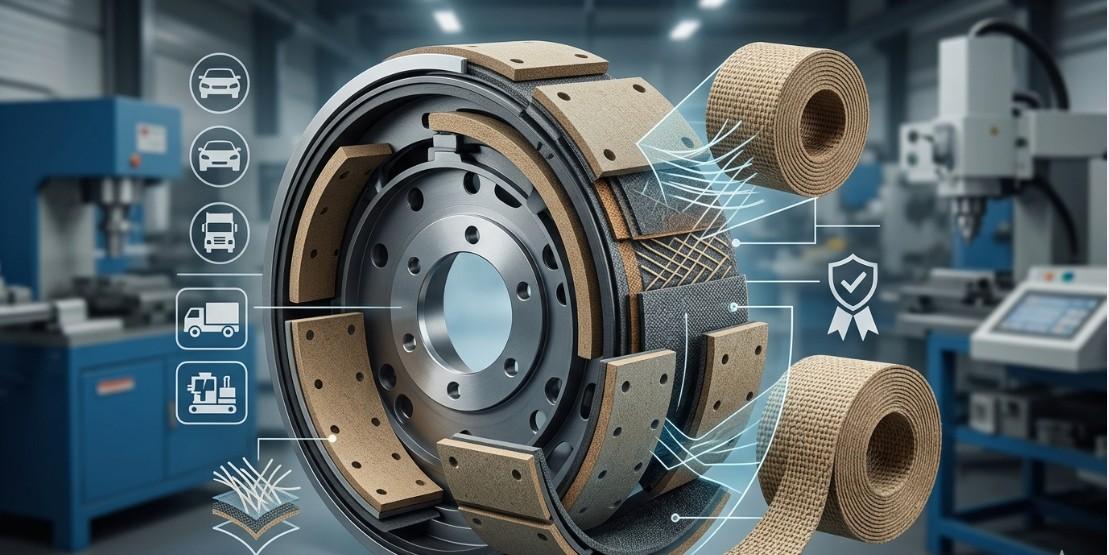
Sourcing high‑quality non‑asbestos brake linings in Dubai requires a structured understanding of the market, product specifications, supplier landscape, and application requirements. Brake linings are a critical safety component in any braking system. Non‑asbestos brake linings have become the standard due to health, environmental, and performance considerations.
This detailed guide explains what non‑asbestos brake linings are, the advantages they offer, and how to source high-quality brake liners in Dubai from trusted suppliers, including the criteria to use when evaluating them and when to choose different materials or supplier types.
Brake linings are the friction surfaces in drum brakes and part of the friction material in disc brakes. Traditionally, brake linings included asbestos due to its excellent heat resistance and durability. However, asbestos fibers are a known health hazard and are banned in many countries.
Modern brake linings instead use non‑asbestos materials such as organic fibers, ceramic composites, and metallic mixtures, delivering comparable or better performance without hazardous effects. These materials maintain braking efficiency, fade resistance, and durability under normal driving conditions and heavy loads.
Non-asbestos brake lining can be engineered material blends using fibers such as aramid (Kevlar), phenolic resins, and inorganic fillers, designed to maintain friction stability across a wide temperature range.
Dubai and the wider United Arab Emirates (UAE) are significant hubs for automotive components, including brake lining supply. The region’s strategic location, business infrastructure, and active trade environment make it a competitive marketplace for both OEM-grade and aftermarket brake components.
Sourcing high-quality non-asbestos brake linings in Dubai involves engaging reputable suppliers like Hamza Fasteners, Al Tabreed Industries, J-1 Brakes, and Triple A Trading. Prioritize products that meet global OEM standards, offer superior heat dissipation, and provide ECE R90 or similar certifications for reliability.
When sourcing brake linings, consider the following factors to ensure high quality and compliance:
Material choice impacts longevity, noise, dust, and cost. Refer to the comparison table below for an overview of non‑asbestos brake lining materials.
Clarify vehicle type, operating environment, and expected load.
Use online directories and local contacts to create a shortlist. Look for suppliers specifying non‑asbestos materials.
Request material composition, performance data, and certification reports.
Test for fitment, friction performance, noise, and dust levels.
Confirm supplier performance through workshops or fleet managers.
Consider price, minimum order quantities, delivery timelines, and after‑sales support.
Choosing the best brake lining material depends on vehicle type, usage, and environment:
Selecting the right material ensures optimal braking performance, safety, and longevity.
| Material Type | Key Features | Advantages | Typical Applications |
|---|---|---|---|
| Non-Asbestos Organic (NAO) | Organic fibers such as aramid, resin, fillers | Quiet, low dust, environmentally friendly | Passenger vehicles, light duty |
| Semi-Metallic Non-Asbestos | Metal fibers blended with friction materials | Durable, better heat dissipation | SUVs, commercial vehicles |
| Ceramic | Ceramic fibers and fillers | Quiet, low dust, stable friction | Premium cars, highway use |
| Low-Metallic Organic | Mix of low metal and organic fibers | Balanced friction/heat handling | Daily use cars and light trucks |
Yes. Non‑asbestos brake pads offer multiple advantages:
Non‑asbestos brake pads are now the standard choice for passenger vehicles, commercial fleets, and industrial applications globally.
This blog covers sourcing high-quality non-asbestos brake linings in Dubai, comparing materials, evaluating suppliers, and guiding optimal selection for passenger vehicles, commercial, and industrial applications.
The best material depends on vehicle type and use. Ceramic is ideal for passenger cars, semi-metallic for heavy-duty vehicles, and NAO for light-duty applications.
Yes, non-asbestos pads are safer, environmentally friendly, and provide stable braking performance with less dust and noise.
Consider vehicle type, driving conditions, and load requirements. Match these with material type and performance specifications for optimal results.
You can source them from verified local distributors, OEM suppliers, and specialized commercial vehicle suppliers across Dubai and the UAE.
Sourcing high-quality non-asbestos brake linings in Dubai requires careful evaluation of materials, supplier credibility, and performance specifications. By understanding the differences between NAO, semi-metallic, and ceramic linings, businesses and vehicle owners can make informed decisions that ensure safety, durability, and optimal braking performance. Regular maintenance and choosing the right supplier further guarantee reliability under Dubai’s demanding driving conditions.
For fleet managers, automotive workshops, and industrial operators across the UAE, Hamza Fasteners Building Materials Trading LLC offers a comprehensive range of certified, high-quality non-asbestos brake linings and pads suitable for passenger, commercial, and heavy-duty vehicles.
Contact our brake lining specialists today and explore solutions designed for performance, safety, and local environmental conditions.
Discover in-depth guides and practical insights to help you make informed decisions across industrial fastening and engineering applications.
November 14, 2024
November 28, 2024
December 14, 2024
December 28, 2024
January 17, 2025
All Rights Reserved © Hamza Fasteners