


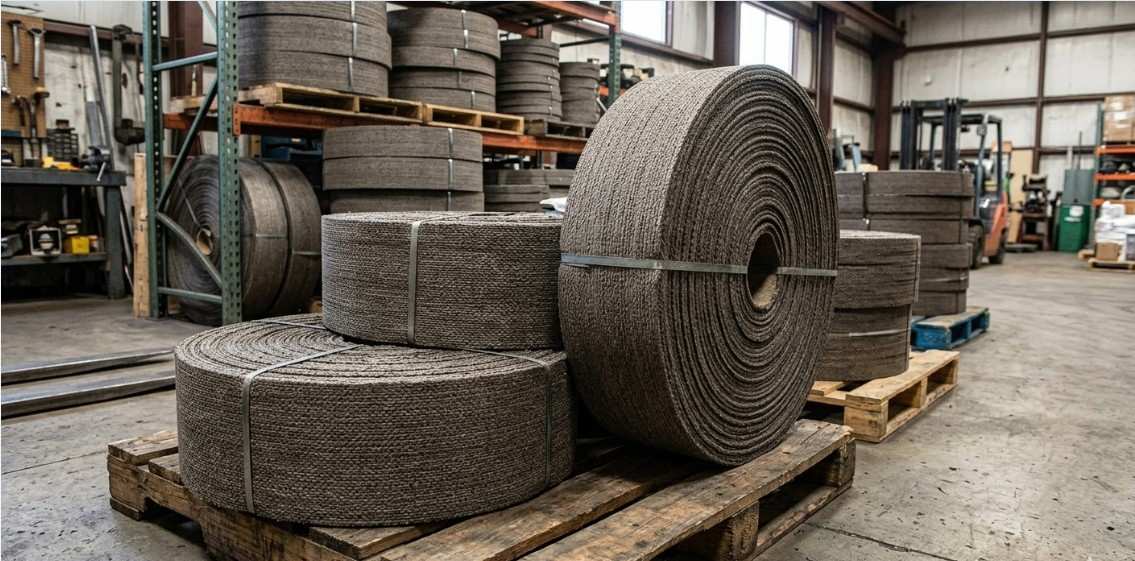
Heavy duty woven brake lining rolls play a critical role in industrial braking systems across the UAE. From construction cranes in Dubai to offshore rigs in Abu Dhabi, these high-performance friction materials are engineered to withstand extreme loads, temperatures, and continuous operation cycles. As industries expand across oil and gas, marine, mining, and logistics sectors, the demand for durable and reliable brake lining solutions continues to grow.
This article provides a comprehensive overview of heavy duty woven brake lining rolls in the UAE, including their types, materials, applications, performance data, and expert insights.
Woven brake lining rolls are friction materials manufactured by weaving fibers such as aramid, glass, or metallic wires and impregnating them with resins. These rolls are supplied in continuous lengths and cut according to application requirements.
They are specifically designed for high-load braking systems where consistent friction, heat resistance, and durability are essential. For those seeking high-quality brake liners, these industrial-grade woven rolls offer superior performance, long service life, and reliable operation under demanding conditions.
Key characteristics include:
For example, industrial-grade woven linings can operate at temperatures up to 315 to 340°C continuously while maintaining performance stability.
Modern UAE industries prefer non asbestos brake lining due to environmental and safety regulations. These materials offer:
They are widely used in marine and oilfield equipment.
These linings contain metal fibers such as steel or copper, offering:
Fully metallic variants can contain up to 90 percent metal, making them ideal for extreme-duty applications.
Aramid fibers provide:
These are preferred in high-frequency braking systems such as cranes and hoists.
Although less common in heavy industry, ceramic linings offer:
They are more suited for controlled industrial environments.
Heavy duty woven brake lining rolls are engineered using advanced composite materials. Typical construction includes:
For instance, advanced woven linings use compacted surface technologies that reduce glazing and improve friction consistency while minimizing wear.
Typical performance metrics include:
These parameters highlight their suitability for demanding industrial conditions.
The UAE’s industrial ecosystem heavily relies on woven brake lining rolls due to its infrastructure and energy-driven economy.
Heavy duty woven brake lining rolls are extensively used in drilling rigs, hoisting systems, and offshore winches across the UAE’s oil and gas sector. These applications involve continuous heavy loads and extreme operating conditions, where braking systems must perform reliably without failure.
The environments demand high heat resistance, stable friction, and durability under constant stress, making woven brake linings a critical component for operational safety and efficiency.
In the marine and shipping industry, woven brake lining rolls are applied in mooring winches, anchor systems, and ship braking mechanisms. These systems operate in highly corrosive environments where exposure to seawater, humidity, and oil contamination is constant.
High-quality woven linings are designed to maintain consistent friction and structural integrity even under such harsh conditions, ensuring safe and controlled vessel operations.
The construction and infrastructure sector in the UAE relies heavily on woven brake lining rolls for tower cranes, elevators, and heavy lifting equipment. With large-scale developments and high-rise projects in cities like Dubai and Abu Dhabi, braking systems must deliver precise control and long-term reliability.
Woven brake linings provide the necessary strength and thermal stability required for continuous lifting and load management, contributing directly to site safety and performance.
In mining and quarrying operations, heavy duty woven brake lining rolls are used in conveyor systems, heavy-duty vehicles, and drilling machinery. These applications involve abrasive environments, heavy loads, and frequent braking cycles.
The materials used in woven linings offer high wear resistance and durability, allowing them to perform effectively even in demanding conditions where equipment reliability is essential for uninterrupted operations.
Woven linings can operate under extreme temperatures without losing friction efficiency, making them ideal for UAE’s hot climate.
Their dense composite structure ensures longer service life, reducing maintenance costs.
Advanced linings resist contamination, ensuring stable performance in marine and oilfield conditions.
Available in various:
This allows customization for specific machinery requirements.
Choosing the right heavy duty woven brake lining roll requires evaluating several factors:
Higher loads demand metallic or reinforced linings for durability.
Applications involving continuous braking require high thermal resistance materials.
Marine or oilfield environments require oil and water-resistant linings.
Consistent friction coefficient ensures reliable braking performance.
Industry experts recommend using non-asbestos, resin-impregnated woven linings for most UAE industrial applications due to their balance of performance, safety, and environmental compliance.
Due to health and safety regulations, asbestos-based linings are being phased out in favor of eco-friendly alternatives.
Expansion in offshore drilling and energy projects is driving demand for high-performance brake linings.
Suppliers are offering tailored solutions based on machinery specifications and operational requirements.
Businesses are prioritizing long-lasting materials to reduce operational costs and downtime.
Despite their advantages, woven brake lining rolls come with certain challenges:
However, these are outweighed by long-term reliability and efficiency.
This blog covers top heavy duty woven brake lining rolls in UAE, including types, materials, industrial applications, performance data, selection criteria, and expert insights for oil and gas, marine, construction, and mining sectors.
Woven brake lining rolls are used in industrial braking systems such as cranes, winches, and heavy machinery. They provide consistent friction and heat resistance under high loads.
Yes, non-asbestos linings are safer, eco-friendly, and offer stable performance in high-temperature conditions. They are widely preferred across UAE industries.
Selection depends on load capacity, operating temperature, and environmental conditions. High-duty applications require reinforced, heat-resistant woven linings.
Lifespan varies based on usage and conditions but typically lasts longer than standard linings. Proper installation and maintenance significantly extend service life.
Heavy duty woven brake lining rolls are essential components in the UAE’s industrial and commercial sectors. Their ability to withstand extreme temperatures, heavy loads, and harsh environments makes them indispensable for applications ranging from oil rigs to construction cranes.
With advancements in material technology such as non-asbestos composites, brass reinforcement, and high-performance resins, these linings offer superior durability, safety, and operational efficiency. For businesses seeking reliable and high-performance braking solutions, Hamza Fasteners Building Materials Trading LLC is a trusted supplier of quality brake lining rolls, offering durable products tailored to demanding industrial applications across the UAE.
Contact brake lining experts for reliable, high-performance woven brake lining solutions tailored to your application needs.
Discover in-depth guides and practical insights to help you make informed decisions across industrial fastening and engineering applications.
November 14, 2024
November 28, 2024
December 14, 2024
December 28, 2024
January 17, 2025
All Rights Reserved © Hamza Fasteners