


TLDR
- Threaded rod comes in several types, including fully threaded, double end, tap end, hollow and fine pitch, each suited to a different fixing need.
- Material choice, carbon steel, stainless steel, galvanized, brass or aluminum, depends mainly on the environment the rod will sit in.
- B7 rod suits high heat settings like refineries, while Grade 8 A354 Grade BD offers higher tensile and yield strength at normal temperatures.
- Rods are sold in standard lengths up to twelve feet and can be cut or custom ordered to fit exact project sizing.
- Two rods can be joined with a coupling nut, a threaded connector or welding, depending on whether the joint needs to be permanent.
Threaded rod is one of those fasteners that seems to be everywhere once you start looking for it. It can be found behind ceiling panels, inside concrete anchors, along pipe supports, and within machinery frames. Most people only think about threaded rod when they need to buy it, and then not again until something needs to be replaced, repaired, or extended.
This comprehensive guide to threaded rod uses, types, and benefits is written for anyone who buys, specifies, or installs threaded rods and wants clear answers without wading through a catalogue. Whether you are matching a grade to a load, choosing the right size, or figuring out how to join two lengths together, this guide will help you make the right decision faster and with greater confidence.
A threaded rod is a long metal bar with continuous helical threading running along part or all of its length. It is also known as all-thread, stud bar, screw rod, or threaded studding. Unlike a bolt, it usually has no head, allowing it to be cut to the exact length required for a job and fitted with nuts or other threaded components at any point along its length. This flexibility makes threaded rod useful in construction, electrical work, plumbing, automotive assembly, and furniture manufacturing. This comprehensive guide to threaded rod uses, types, and benefits explains the key factors to consider so you can choose the right grade, size, and thread pitch for your application.
Not all threaded rod looks the same once you get past the obvious cylindrical shape. Manufacturers cut the threading differently depending on what the rod needs to do, and knowing these variations upfront can save you from ordering the wrong one and having to make a second trip.
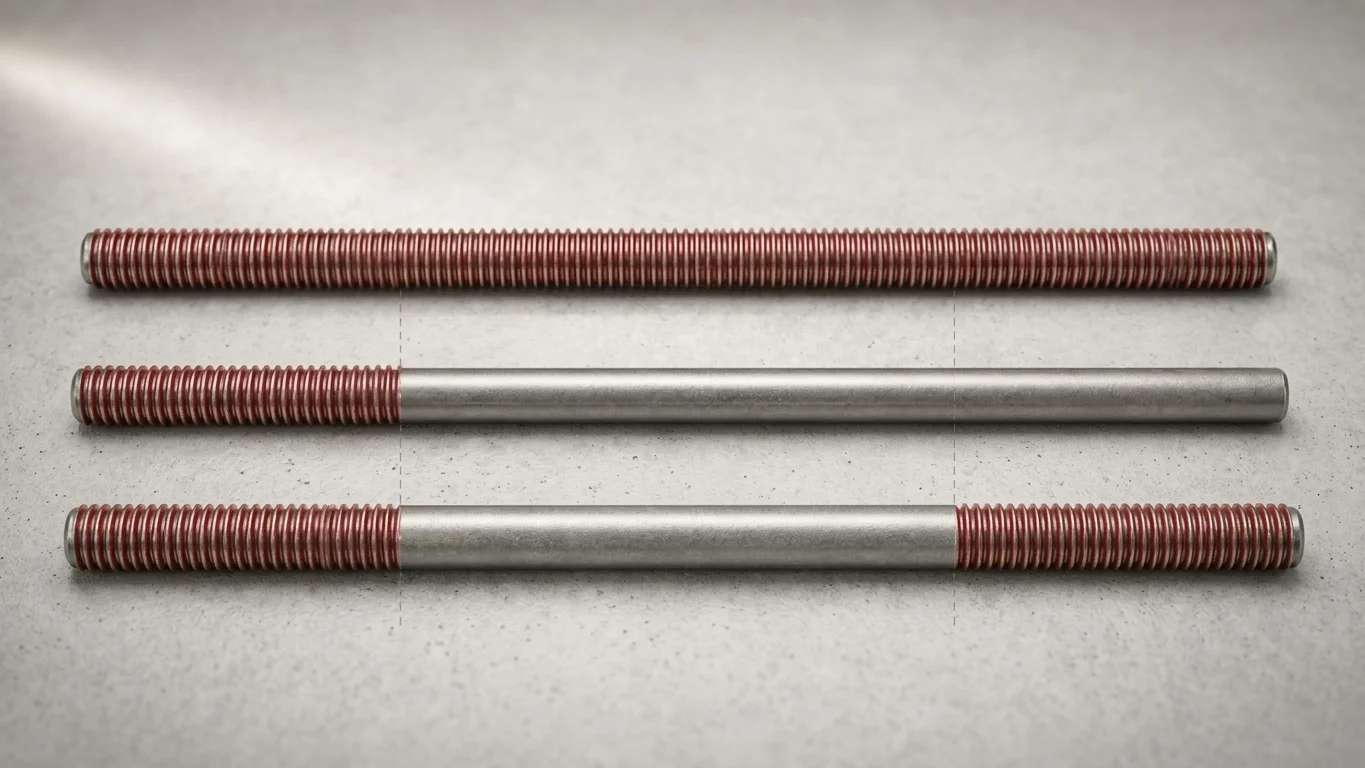
Fully threaded rod: This is the one most people picture when they hear the term. Threading runs the whole way down the bar, so you can thread a nut on anywhere along its length instead of being locked into a fixed spot.
Double end threaded rod: Only the two ends carry threading, with a bare, unthreaded stretch of metal in between. It works well when you only need to anchor at the two ends and don’t want threading exposed along the middle.
Tap end studding: At a glance this looks a lot like double end rod, but the threaded sections aren’t equal. One end is threaded longer than the other, which comes in handy when one side needs a deeper bite than the other.
Hollow threaded rod: As the name suggests, this type is bored straight through the centre. Electricians and plumbers use it when a cable or a small pipe needs to run through the rod rather than around it.
Fine pitch threaded rod: The threads sit closer together than on standard rod. That tighter spacing helps it resist loosening from vibration and gives it a bit more shear strength, which matters in machinery or anywhere there’s constant movement.
Material choice affects strength, cost and how well the rod holds up outdoors. Carbon steel remains the most common option because it is affordable and easy to work with, though it needs a protective coating outdoors. Galvanized threaded rod adds a zinc layer that resists rust in humid or coastal conditions, which is why many contractors in the Gulf choose it for exposed structural work.
Stainless steel offers strong corrosion resistance for marine and chemical environments, while brass and aluminum suit lighter, non-structural applications where weight or conductivity matters more than raw strength. For outdoor or high-humidity projects, choosing a reliable galvanized threaded rods supplier UAE can help ensure the rods have the right zinc coating for the intended environment.
Two grades come up again and again in procurement conversations. Here is how they compare side by side.
| Property | B7 Threaded Rod | Grade 8 (A354 Grade BD) |
| Material | Chromium molybdenum alloy steel | Medium carbon alloy steel |
| Minimum Tensile Strength | 125 ksi | 150 ksi |
| Minimum Yield Strength | 105 ksi | 130 ksi |
| Best Suited For | High temperature environments, pressure vessels | Automotive, heavy machinery, general structural bolting |
B7 performs better where heat is a factor, such as refineries and power plants, while Grade 8 delivers higher raw strength at normal ambient temperatures.
Sizing usually comes down to two things, the metric thread size and the overall length you need.
| Thread Size | Major Diameter (mm) | Thread Pitch (mm) |
| M6 | 6 | 1 |
| M8 | 8 | 1.25 |
| M10 | 10 | 1.5 |
| M12 | 12 | 1.75 |
| M16 | 16 | 2 |
Stock lengths typically run from one foot up to twelve feet, and most suppliers can cut rods to a custom length when a standard size does not fit the job.
The reason threaded rod stays popular across so many trades comes down to a short list of practical benefits.
This comprehensive guide to threaded rod uses types and benefits keeps coming back to versatility because that single feature explains most of its popularity on site.
Cutting threaded rod is straightforward once you have the right tool for the material and diameter. A hacksaw works for smaller brass or aluminum rods, an angle grinder handles steel efficiently, and a band saw gives the cleanest cut for high volume jobs. After cutting, deburring the end with a file keeps nuts running smoothly onto the thread.
Joining two rods together usually means one of three methods. A coupling nut is the simplest and most common choice, screwing onto both rod ends to extend the length. Threaded rod connectors add a locking feature such as a setscrew for extra resistance to vibration. Welding creates a permanent joint but should only be done on weldable grades by a qualified welder, since heat can affect the surrounding thread strength.
Picking the right rod comes down to matching load requirements, environment and thread size to the job in front of you. A structural anchor exposed to weather calls for galvanized or stainless steel, while an indoor machinery mount can often use standard carbon steel.
Check the tensile and yield strength needed for the load, confirm the thread pitch matches your nuts and fittings, and always allow a little extra length for future adjustments. This comprehensive guide to threaded rod uses types and benefits is meant to make that decision easier the next time you are standing at a supplier counter comparing grades.
Threaded rod earns its place in so many projects because it is simple, adjustable and available in a material for almost any condition. Getting the grade, size and finish right the first time saves a return trip and keeps the installation performing as intended for years.
For sourcing and technical guidance on rods, fittings and related hardware, Hamza Fasteners Building Materials Trading LLC can help you find the right specification for your application.
Get the right threaded rod the first time
Wrong grade, wrong pitch or wrong coating means a wasted trip and a delayed job. Our team can confirm the material, size and finish that fits your load and environment before you order, so the rod works right on installation day.
B7 is made from chromium molybdenum steel and performs best in high heat environments, while Grade 8 (A354 Grade BD) offers higher tensile and yield strength at normal temperatures.
Yes, threaded rod can be cut on site with a hacksaw, band saw or angle grinder, and many suppliers also offer custom length cutting before delivery.
Galvanized and stainless steel threaded rods resist corrosion far better than plain carbon steel, making them the better choice for outdoor or coastal installations.
November 14, 2024
November 28, 2024
December 14, 2024
December 28, 2024
January 17, 2025
All Rights Reserved © Hamza Fasteners