


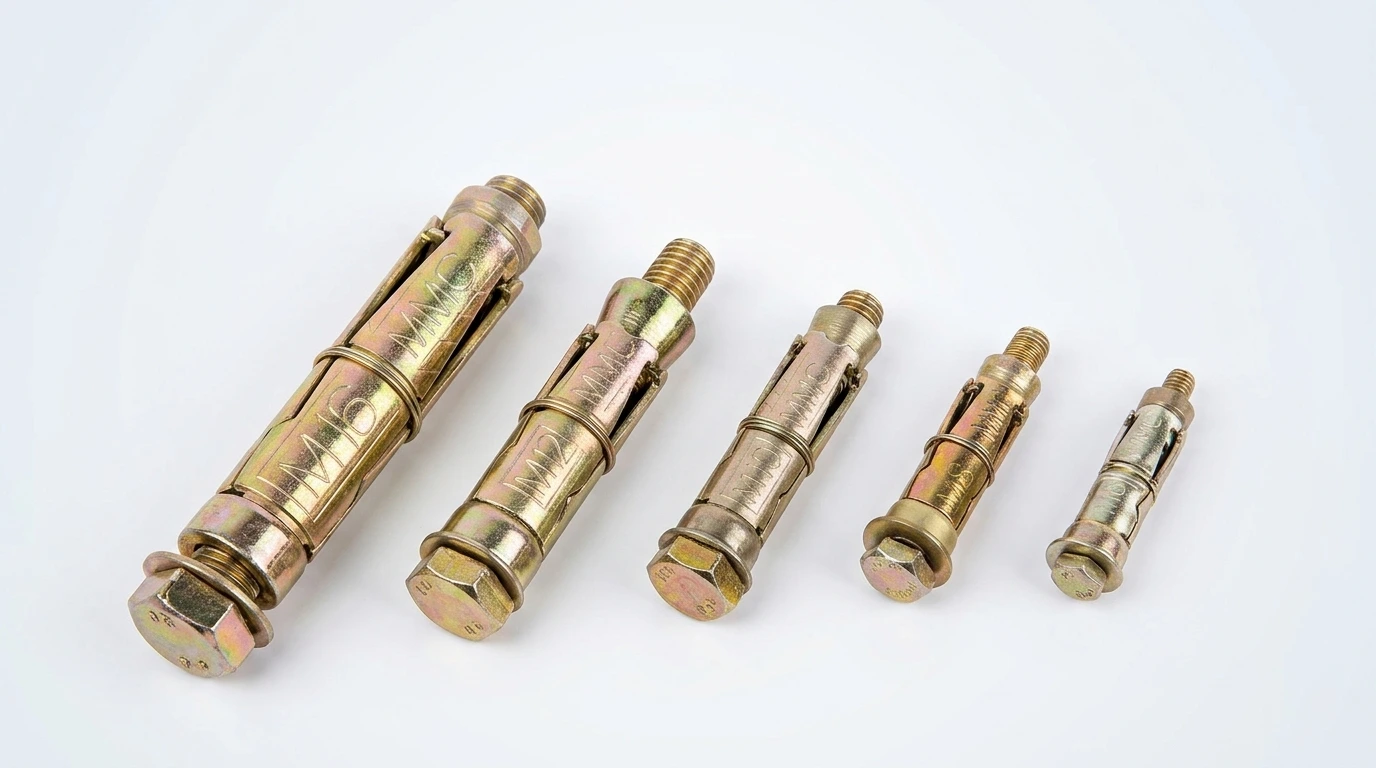
A Rawl bolt is a heavy-duty expansion anchor for fixing steel, brackets and machinery into solid concrete, brick or stone. This guide covers how it works, where it is used, the loose bolt and stud types, the material grades, and the steps to set it so it holds its rated load.
Ask for a Rawl bolt at any hardware counter and you will usually be handed a heavy expansion anchor for concrete. The name started as a brand, then became a general trade word, so the exact product can differ between suppliers.
If you searched for “what is a rawl bolt? uses, types & installation”, this guide covers what it is, where it fits, which type to pick and how to set it properly.
A Rawl bolt is a heavy-duty mechanical expansion anchor used to fix steel, brackets and equipment into solid concrete, brick or stone. A threaded bolt sits inside a metal sleeve, and tightening the nut pulls a cone into that sleeve so it expands and grips the hole wall.
The name comes from Rawlplug, a London company that launched its Rawlbolt in 1930. Over time the word became generic, so confirm the mechanism, size and load rating before ordering. It belongs to the same family as sleeve and wedge anchors, but is usually a multi-part set rather than a single pre-assembled unit.
Rawl bolts are used to secure components to solid concrete and suitable masonry where a reliable mechanical fixing is required. Common applications include:
On industrial sites, the anchor must be suitable for the expected load and operating conditions. Installations exposed to vibration, repeated movement or significant pulling forces may require specific anchor designs and engineering checks.
Rawl bolts come in two main forms and three common materials, so the right choice depends on how you fix and where you fix. The form is either a loose hex-head bolt or a projecting stud, and the material is usually zinc-plated, galvanised or stainless steel.
Loose bolt type: a hex-head bolt passes through the fixture and into the sleeve, then gets tightened with a spanner. It suits brackets and base plates fixed down in one pass.
Projecting stud type: a threaded stud stays exposed after the anchor is set, and the fixture goes over it with a washer and nut. It suits fixtures that need adjusting or replacing later.
You can check sizes and grades on our Rawl bolt product page before finalising a list.
Not sure which type fits your drawing? Send us the load, base material and site conditions and we will suggest a size and grade. Share your fixing details.
Holding strength depends on four things: bolt diameter, embedment depth, the quality of the concrete or masonry, and edge distance. A thicker bolt set deeper into sound concrete holds more than a small one set shallow, though spacing matters just as much.
Anchors placed too close to an edge, or to each other, can pull out a cone of concrete before the bolt gives up. That is a base material failure, and it is the one most often missed on site.
Structural connections need an engineer’s sign-off. Anchoring design guidance sits in ACI 318, and bolt mechanical properties are covered by ISO 898-1.
Install a Rawl bolt by drilling the correct hole size, cleaning it fully, inserting the anchor, positioning the fixture and tightening to the specified torque. Cleaning and hole size matter most, because dust and oversized holes quietly cut the grip before any load arrives.
Correct installation is essential for ensuring the anchor grips properly and performs reliably on site. Follow these steps:
In brick or block, land in solid material and avoid mortar joints. In concrete, avoid drilling into rebar.
The most common Rawl bolt mistakes are drilling an oversized hole, leaving dust in the hole, fixing into hollow block, and over-tightening the nut. Each one stops the sleeve from gripping properly, so the anchor holds far less than its rated load.
This guide on what is a rawl bolt? uses, types & installation comes down to three decisions the right type for your fixing sequence, the right material for the site, and clean installation habits. Get those right and the anchor performs reliably for years.
If you need help matching size and grade to your project, the team at Hamza Fasteners Building Materials Trading LLC can guide you.
Get the right Rawl bolt for your fixing
Tell us your load, base material and site conditions, and our team will recommend the correct type, size and material grade. You get clear advice before you order, so the fixing is right the first time.
These are the questions most often asked alongside What Is a Rawl Bolt? Uses, Types & Installation.
No, though they are related. Both rely on expansion, but a traditional Rawl bolt is a multi-part sleeve and cone assembly, while a wedge anchor is a single stud with a clip at the tip.
No. It needs solid material to expand against. For hollow or lightweight block, use a frame fixing anchor made for that base.
Use the drill diameter stated by the manufacturer for that bolt size. It is not the clearance hole in the fixture, and an oversized hole reduces holding strength.
Generally no. Once the sleeve has expanded, removal usually damages the thread or the base material. For fixings that come apart often, a drop-in anchor is a better choice.
write 1.5 line answer for this and make question h3
Rawl bolts are used to securely fasten heavy objects to concrete, brick, and masonry surfaces. They are commonly used to install machinery, steel structures, handrails, shelves, and support brackets.
Explore these related fastener guides to learn more about choosing the right materials, grades and finishes for your project.
November 14, 2024
November 28, 2024
December 14, 2024
December 28, 2024
January 17, 2025
All Rights Reserved © Hamza Fasteners