


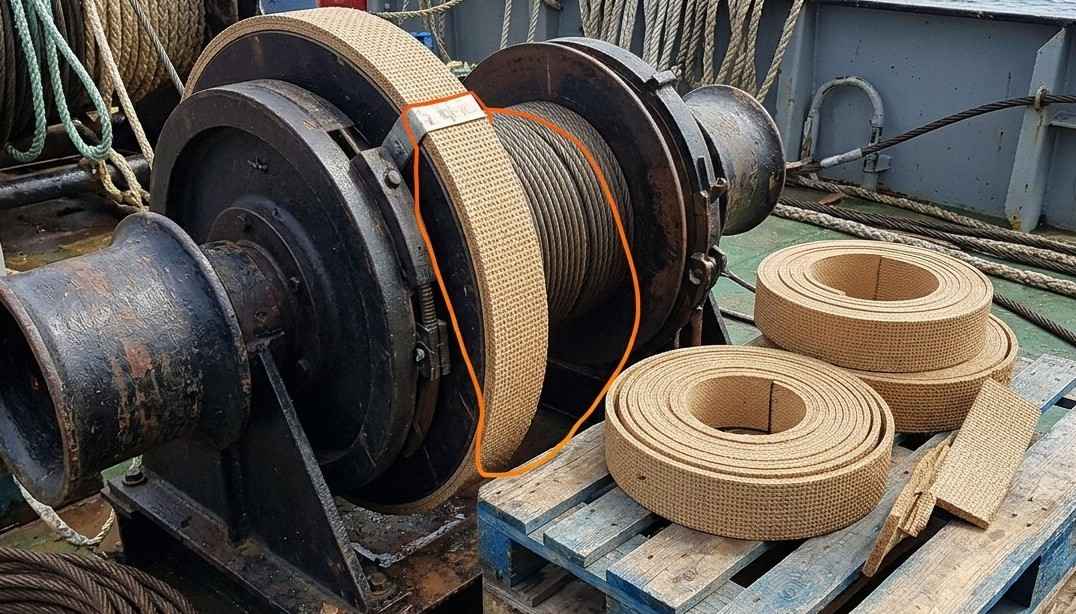
Marine winches operate under demanding conditions where reliable braking is essential for controlling loads, lifting equipment, and maintaining safe operation on deck. The brake lining is one of the most important components in this system because it creates the friction needed to slow down or hold the winch drum.
Choosing the right woven brake lining for marine winches is not simply a matter of matching dimensions. Material composition, friction characteristics, temperature resistance, moisture exposure, drum condition, and operating load all influence brake performance. A correctly specified lining can provide consistent braking, reduce wear, and extend maintenance intervals.
Before selecting a brake lining, start by understanding how the winch is used. A mooring winch, anchor winch, towing winch, or cargo winch may experience very different loads and duty cycles.
Consider:
These factors help determine the required friction performance and thermal capacity of the lining.
For example, a winch that frequently stops heavy loads generates considerably more heat than one used occasionally for light-duty positioning. Selecting a lining based only on its physical size may therefore result in premature wear or inconsistent braking.
Friction coefficient is one of the most important specifications when selecting marine winch brake lining. It determines how effectively the lining can generate braking force against the drum.
However, a higher friction coefficient is not automatically better. Excessively aggressive friction can increase drum wear, create grabbing during braking, or make the system difficult to control.
The preferred lining should provide:
For marine applications, friction stability is particularly important because winches may need to hold or control substantial loads for extended periods.
Woven brake linings are manufactured using reinforced friction materials designed to withstand mechanical and thermal stresses. The exact composition varies between manufacturers and applications.
A suitable material should be selected according to the winch’s operating conditions rather than simply choosing the most durable-looking option.
Important properties include:
Repeated braking converts mechanical energy into heat. If the lining cannot dissipate this heat effectively, its friction characteristics can change and accelerated wear may occur.
A high temperature brake lining is therefore important for winches subjected to frequent braking cycles or heavy loads.
Marine winches can operate for long periods in demanding environments. A lining with good wear resistance can help maintain consistent braking performance while reducing replacement frequency.
Saltwater, humidity, and condensation can affect braking components. The lining should be appropriate for marine environments and should maintain predictable friction when exposed to moisture.
The woven structure must withstand repeated contact, pressure, and thermal cycling without excessive cracking, separation, or deformation.
Even a high-quality lining may perform poorly when paired with an unsuitable drum surface. Brake lining and drum compatibility should therefore be considered together.
Check the drum:
A damaged or excessively worn drum can prevent the new lining from making uniform contact. This can create localized hot spots and uneven wear.
Before installing a replacement woven brake lining, inspect the drum carefully. If the surface is heavily scored, contaminated, or out of specification, correcting the drum condition may be necessary before fitting new friction material.
Thickness is another important specification. The correct thickness depends on the original brake design, available clearance, and manufacturer requirements.
Using a lining that is too thick can interfere with brake adjustment or prevent proper clearance. A lining that is too thin may reduce service life and affect the available adjustment range.
When ordering brake lining for winches, provide the original dimensions whenever possible, including:
Accurate measurements help avoid installation problems and unnecessary downtime.
Marine winch brakes can use different lining arrangements depending on the brake design. Some applications use continuous bands, while others use segmented or pre-formed sections.
The lining may also require drilled holes, countersunk holes, rivet holes, or other attachment configurations. For marine applications, choosing the correct ship brake liners can help ensure compatibility with the existing braking system.
If the replacement lining is to be mechanically fastened, specify the fastening method and hole pattern accurately. Incorrect positioning can compromise installation and prevent the lining from sitting correctly against the brake surface.
For curved brake bands, the required radius should also be considered. A lining designed for a particular drum curvature may require different preparation from a flat friction strip.
Marine equipment faces conditions that ordinary industrial machinery may not encounter. Salt spray, high humidity, temperature changes, and prolonged outdoor exposure can all influence brake component performance.
When specifying marine brake lining, consider whether the winch operates:
Environmental exposure should be communicated to the brake lining supplier so the material can be matched to the actual application.
Modern brake lining selection should also consider regulatory and workplace safety requirements. Asbestos-containing friction materials have historically been used in braking applications but are now restricted or prohibited in many markets.
For new installations and replacements, specify an appropriate non-asbestos brake lining where required by applicable regulations and equipment standards.
Non-asbestos friction materials can be engineered for different combinations of friction stability, heat resistance, wear resistance, and mechanical strength.
One of the easiest ways to avoid receiving the wrong product is to provide complete technical information when requesting a quotation or replacement.
A useful specification should include:
| Specification | Information to Provide |
| Application | Marine winch, anchor, mooring, towing, etc. |
| Lining type | Woven brake lining |
| Length | Required measurement |
| Width | Required measurement |
| Thickness | Required measurement |
| Drum diameter | Actual brake drum size |
| Friction requirement | Required coefficient or OEM specification |
| Temperature | Normal and peak operating conditions |
| Environment | Marine, saltwater, outdoor, enclosed |
| Attachment | Riveted, bonded, or specified method |
| Material | Non-asbestos or required material type |
Providing this information allows the supplier or manufacturer to identify a suitable friction material rather than relying on dimensions alone.
Choosing the right woven brake lining for marine winches is about more than matching dimensions. Load capacity, braking frequency, friction performance, heat resistance, drum condition, and exposure to moisture all need to be considered to achieve dependable performance.
With the right specification, the lining can provide smoother braking, reliable load control, and longer service life in demanding marine environments. Hamza Fasteners Building Materials Trading LLC can help with suitable friction lining options based on the requirements of your application.
Getting the right material from the start can also help avoid premature wear, frequent replacements, and unnecessary downtime. Contact our team to discuss your winch requirements and find a suitable brake lining.
Discover in-depth guides and practical insights to help you make informed decisions across industrial fastening and engineering applications.
November 14, 2024
November 28, 2024
December 14, 2024
December 28, 2024
January 17, 2025
All Rights Reserved © Hamza Fasteners