


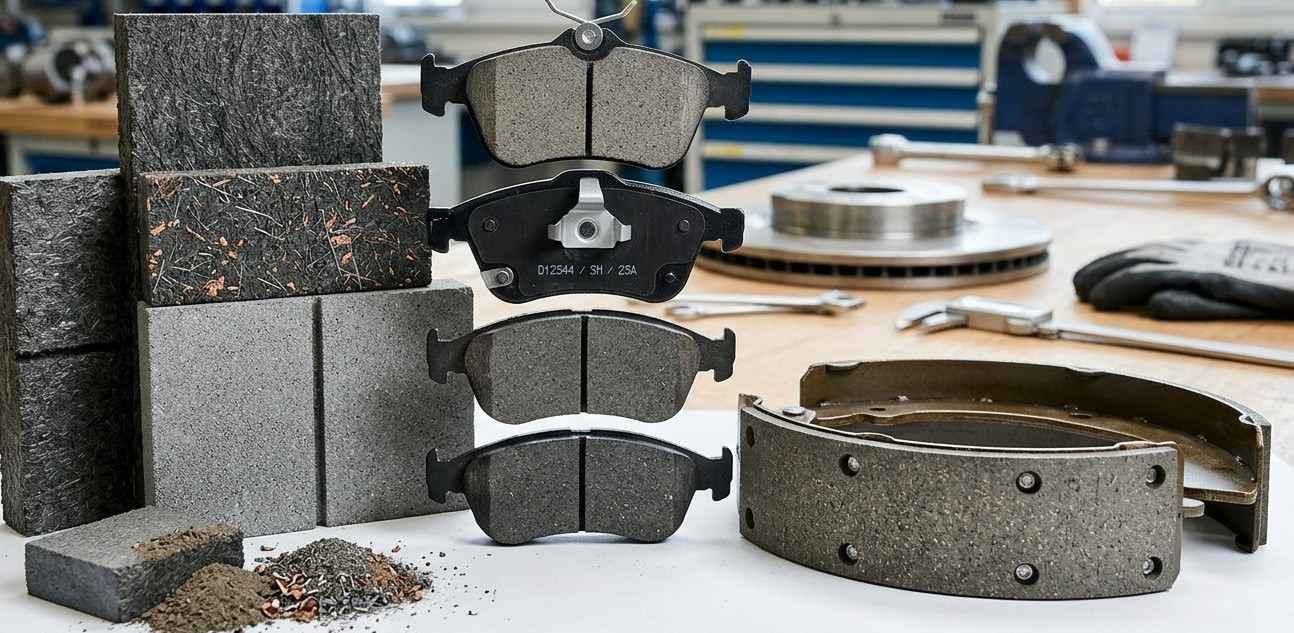
Choosing the right friction material is essential for safe, reliable, and long-lasting braking performance. Brake lining materials must provide consistent friction, resist wear, handle heat, and perform reliably under different operating conditions.
Common friction materials include organic, semi-metallic, ceramic, and sintered compounds. The best choice depends on the application, operating temperature, braking load, speed, and required service life.
Brake lining material is the friction material attached to a brake shoe, brake band, or other braking component. When braking occurs, the lining contacts a rotating surface and converts kinetic energy into heat.
A good brake lining material should offer:
For industrial machinery, commercial vehicles, marine equipment, and heavy-duty systems, choosing the correct friction material is particularly important.
Organic brake linings are made from fibers, resins, fillers, and friction modifiers. Modern formulations are generally asbestos-free.
They provide smooth braking and good noise and vibration control, making them suitable for light and moderate-duty applications.
Advantages:
However, organic materials may have lower heat resistance than metallic or ceramic alternatives.
Semi-metallic brake linings contain metallic fibers or particles combined with resins and other friction modifiers. Steel, iron, and other metallic components may be used.
They offer a good balance between durability, friction performance, heat resistance, and cost.
Benefits include:
Semi-metallic materials are widely used in automotive, commercial, and industrial braking systems.
Ceramic brake lining materials use ceramic fibers and engineered friction compounds to provide stable performance at elevated temperatures.
They are valued for low noise, reduced dust, and smooth braking characteristics.
Key benefits include:
The main disadvantage is their higher cost compared with many conventional friction materials.
Sintered friction materials are produced by compacting and heating metallic powders and other components. This creates a dense and highly durable friction material.
They are suitable for demanding applications involving heavy loads, high temperatures, and frequent braking.
Advantages include:
Sintered materials are often used in industrial machinery, mining equipment, heavy-duty systems, and other severe operating environments.
| Material | Heat Resistance | Wear Resistance | Noise | Typical Applications |
| Organic | Moderate | Moderate | Low | Light-duty braking |
| Semi-metallic | High | High | Moderate | Automotive and industrial |
| Ceramic | High | High | Low | Performance applications |
| Sintered | Very High | Very High | Moderate | Heavy-duty systems |
Actual performance depends on the formulation, temperature, pressure, speed, and mating surface.
Repeated braking generates heat. If the friction material cannot handle the operating temperature, its performance and service life may decrease.
For high-temperature applications, ceramic, semi-metallic, or sintered materials may be more appropriate.
Heavy machinery requires friction materials that can handle high loads without excessive wear or deformation. Always match the lining specification to the braking system.
A suitable brake lining should maintain consistent friction across its expected operating range. Stable friction helps provide predictable braking performance.
For frequently operated equipment, a wear-resistant brake lining can extend maintenance intervals and reduce downtime.
The lining must also be compatible with the drum, disc, or other mating surface.
If noise reduction is important, organic and ceramic friction materials may provide advantages. In heavy industrial applications, however, heat resistance and durability may be more important.
Brake lining materials are used in:
The best friction material for brake lining depends on the operating environment and performance requirements. Organic materials are suitable for smoother, lighter-duty braking, while semi-metallic materials provide a strong balance of durability and heat resistance.
Ceramic materials are useful where low noise and stable performance are important, while sintered materials are designed for demanding heavy-duty applications.
For reliable brake lining solutions, Hamza Fasteners Building Materials Trading LLC can help you find suitable friction materials for your application. Contact our team to discuss your brake lining requirements and find the right solution.
Discover in-depth guides and practical insights to help you make informed decisions across industrial fastening and engineering applications.
November 14, 2024
November 28, 2024
December 14, 2024
December 28, 2024
January 17, 2025
All Rights Reserved © Hamza Fasteners