


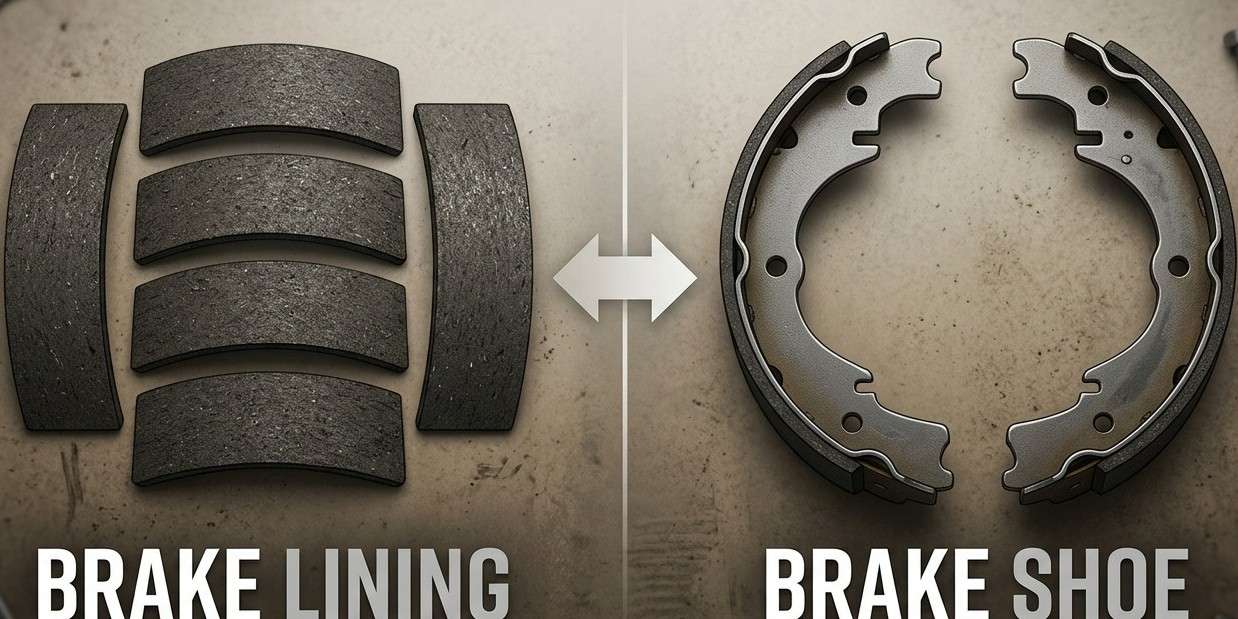
Brake systems are made up of several components that work together to slow down or stop a vehicle. Two terms that often cause confusion are brake lining and brake shoes. Although they are closely related, they are not the same component.
The main difference is simple: brake lining is the friction material, while a brake shoe is the metal component that holds and supports the lining. Understanding this difference can help when choosing replacement brake parts, identifying wear, or comparing different braking systems.
Brake lining is a friction material designed to create the resistance needed to slow or stop a vehicle. It is usually bonded, riveted, or otherwise attached to a brake shoe or another braking component.
When the brake is applied, the lining comes into contact with a rotating surface, such as a brake drum. This contact creates friction and converts the vehicle’s kinetic energy into heat.
Modern brake linings can be made from different combinations of materials, including fibers, resins, fillers, and friction modifiers. The exact formulation depends on the vehicle, braking application, operating temperature, and required performance.
A good brake lining needs to provide consistent friction, withstand heat, resist wear, and operate reliably under repeated braking conditions.
A brake shoe is a rigid component used mainly in drum brake systems. It provides the structural support for the brake lining.
A typical brake shoe consists of a curved metal plate or frame with friction lining attached to its outer surface. When the driver presses the brake pedal, the braking mechanism pushes the shoes outward against the inside surface of the brake drum.
The resulting friction slows the rotation of the drum and, therefore, the vehicle’s wheels.
In simple terms, the brake shoe is the support structure, while the brake lining is the friction material attached to it.
The terms are sometimes used interchangeably, but they describe different parts.
| Feature | Brake Lining | Brake Shoe |
| Main function | Creates friction | Supports the lining |
| Material | Friction compound | Usually metal |
| Location | Attached to braking component | Inside drum brake assembly |
| Wear | Designed to wear over time | Usually lasts longer |
| Replacement | Can sometimes be replaced separately | May be replaced with lining attached |
| Primary role | Friction and heat resistance | Structural support and movement |
This distinction is particularly important when searching for brake lining suppliers, replacement components, or industrial friction materials.
Brake shoes and brake lining work as one braking assembly.
When the brake pedal is pressed, hydraulic or mechanical force activates the drum brake mechanism. This causes the brake shoes to move outward. The lining attached to the shoes then presses against the inner surface of the rotating drum.
The friction between these surfaces slows the drum. Since the drum is connected to the wheel, the vehicle also slows down.
When the brake pedal is released, the shoes move away from the drum, allowing the wheel to rotate freely again.
This simple mechanism is why the quality of both the brake shoe and brake lining material matters.
No. Brake shoes and brake linings are not the same thing.
A brake shoe is the mechanical support that carries the friction material. Brake lining is the material that actually produces friction during braking.
However, replacement brake shoes are often supplied with the lining already attached. This can make it seem as though the two terms refer to the same product.
For some applications, only the worn lining may need to be replaced. In other cases, replacing the complete brake shoe assembly may be more practical.
Brake shoes are most commonly associated with drum brake systems.
Drum brakes have been widely used in passenger vehicles, commercial vehicles, trailers, industrial machinery, and other mechanical applications. They remain useful because drum brake systems can provide reliable braking performance and are often suitable for applications where durability and parking brake functionality are important.
Disc brakes, by comparison, generally use brake pads rather than brake shoes.
Understanding the difference between brake pads and brake shoes is therefore also useful when identifying the braking system used on a vehicle.
Brake lining gradually becomes thinner as it is exposed to friction and heat. The replacement interval depends on driving conditions, vehicle weight, braking frequency, lining material, and operating environment.
Common signs of worn brake lining can include:
However, these symptoms can also result from other brake system problems. A qualified technician should inspect the complete braking system before deciding which component needs replacement.
Choosing the right brake lining material depends on the intended application rather than one material being suitable for every situation. For applications requiring asbestos free friction materials, non asbestos brake lining can be considered as a suitable option.
Important characteristics include friction stability, temperature resistance, wear resistance, mechanical strength, and compatibility with the brake drum or mating surface.
For heavy duty or industrial applications, the operating temperature and load are particularly important. A friction material that performs well under normal road conditions may not be suitable for continuous industrial braking.
Manufacturers therefore develop different friction compounds for different operating requirements.
Brake shoes and friction linings are not limited to automotive braking systems. Similar friction materials are used in industrial equipment, machinery, lifting systems, and other mechanical applications.
Industrial braking systems may experience higher loads, frequent operation, or elevated temperatures. This makes correct friction material selection especially important.
When sourcing industrial brake lining, buyers should consider the equipment type, dimensions, operating temperature, braking load, friction requirements, and expected service life.
Understanding the difference between brake lining and brake shoes makes it easier to identify the right component for a braking system. Brake lining provides the friction needed to slow or stop movement, while the brake shoe supports the lining and transfers force to the brake drum.
For reliable brake lining solutions, Hamza Fasteners Building Materials Trading LLC can help you find suitable options for your application. If you need guidance on selecting the right brake lining for your equipment, contact our team to discuss your requirements and get expert assistance.
Discover in-depth guides and practical insights to help you make informed decisions across industrial fastening and engineering applications.
November 14, 2024
November 28, 2024
December 14, 2024
December 28, 2024
January 17, 2025
All Rights Reserved © Hamza Fasteners