


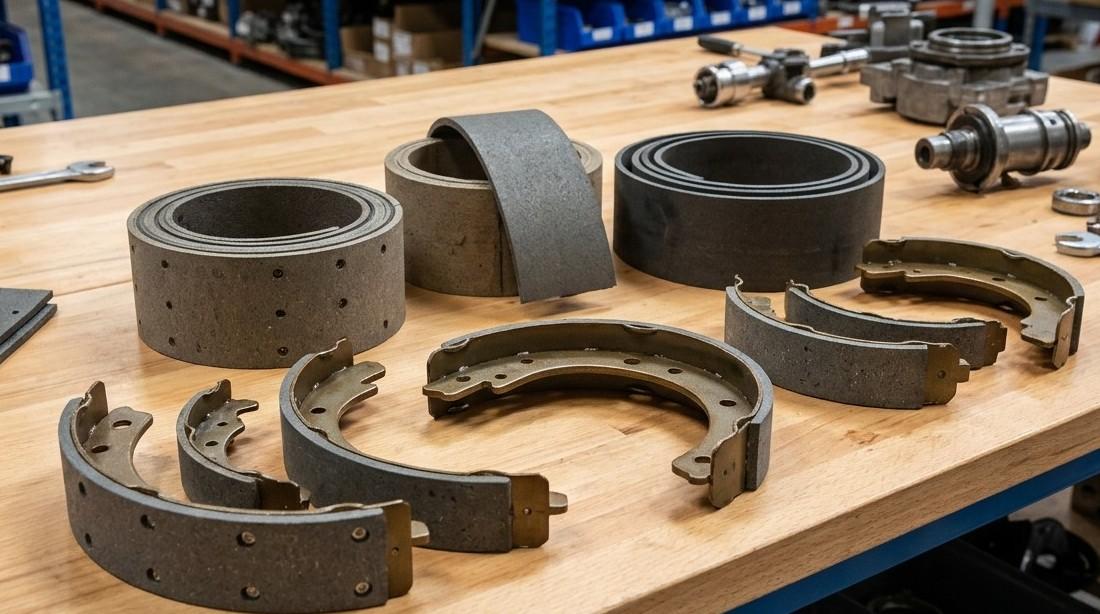
Brake linings work quietly in the background until the day they stop working the way they should. Most drivers never think about them until a strange noise or a soft pedal forces the issue. Understanding the key maintenance indicators and wear factors for brake linings can save you from an expensive repair bill or a dangerous situation on the road.
This guide breaks down the early warning signs of brake lining wear, the wear factors for brake linings that make them wear out faster and what you can do to keep your braking system reliable for longer.
A brake lining is the friction material bonded to a brake shoe or pad. Every time you press the pedal, this material presses against a drum or rotor to slow the wheel down. That contact generates heat and friction, and over time it wears the material thinner.
Once the lining gets too thin, it can no longer grip the drum or rotor properly. Stopping distances get longer, the pedal may feel different and metal parts can start grinding against each other. That last stage causes real damage to rotors and drums, which turns a simple pad change into a much bigger repair. This is exactly why recognizing maintenance indicators for brake linings early makes such a big difference.
Most vehicles give clear warning signs long before a total brake failure. Paying attention to these maintenance indicators can save both money and risk.
| Warning Sign | What It Usually Means | Recommended Action |
| Squealing noise | Wear indicator contacting rotor | Schedule inspection soon |
| Grinding sound | Lining fully worn, metal contact | Stop driving and inspect immediately |
| Soft or spongy pedal | Reduced friction or air in system | Have brakes checked promptly |
| Vibration when braking | Uneven wear or warped rotor | Inspect linings and rotor surface |
| Dashboard warning light | Sensor detecting minimum thickness | Book a service appointment |
Not every vehicle wears through brake linings at the same rate. Several wear factors combine to determine how long a set of linings will last, and understanding them is central to any conversation about brake lining maintenance and wear.
Aggressive braking, late stops and constant riding of the brake pedal all generate extra heat and accelerate wear. Smooth, gradual braking puts far less stress on the friction material.
Heavier vehicles need more friction force to stop, which increases the rate at which the lining material wears down. This is especially true for trucks, buses and machinery that regularly carry heavy loads.
City driving with frequent stop and start traffic wears linings faster than steady highway cruising. Hilly terrain and steep descents also add extra strain since the brakes work harder and longer.
Hot climates push brake temperatures higher, which speeds up material breakdown. Dust, sand, water and road debris can also contaminate the lining surface and reduce its grip over time.
Not all friction materials perform the same way. Lower quality linings tend to wear faster, glaze more easily and lose consistency under heat.
| Material Type | Wear Rate | Heat Resistance | Typical Use |
| Semi metallic | Moderate to high durability | High | Heavy vehicles and demanding conditions |
| Ceramic | Slower wear, longer life | Good | Passenger cars needing quiet operation |
| Organic non asbestos | Wears faster under heavy use | Lower | Light vehicles with moderate driving |
Checking lining thickness regularly helps catch wear before it becomes a safety concern. A simple visual and physical check can be done as part of routine maintenance.
Most manufacturers recommend replacement once the lining thickness drops to around three millimeters, though this can vary depending on the vehicle and braking system design.
Brake linings should be replaced once they reach the minimum thickness set by the manufacturer or as soon as any of the warning signs above appear consistently.
Waiting too long increases the risk of drum or rotor damage, which adds significantly to repair costs. Regular inspection during routine servicing is the simplest way to avoid being caught off guard by hidden wear.
Understanding the maintenance indicators and wear factors for brake linings is one of the simplest ways to avoid a costly repair or an unsafe drive. Watching for unusual noises, changes in pedal feel and reduced stopping performance helps catch wear early, while understanding factors like driving habits, load and climate can help you choose the right material for your needs.
For vehicles and industrial equipment operating under demanding conditions, Hamza Fasteners Building Materials Trading LLC can help you find brake linings suited to your specific application and usage pattern.
For guidance on brake lining selection and maintenance schedules, contact our team to discuss your requirements.
November 14, 2024
November 28, 2024
December 14, 2024
December 28, 2024
January 17, 2025
All Rights Reserved © Hamza Fasteners