


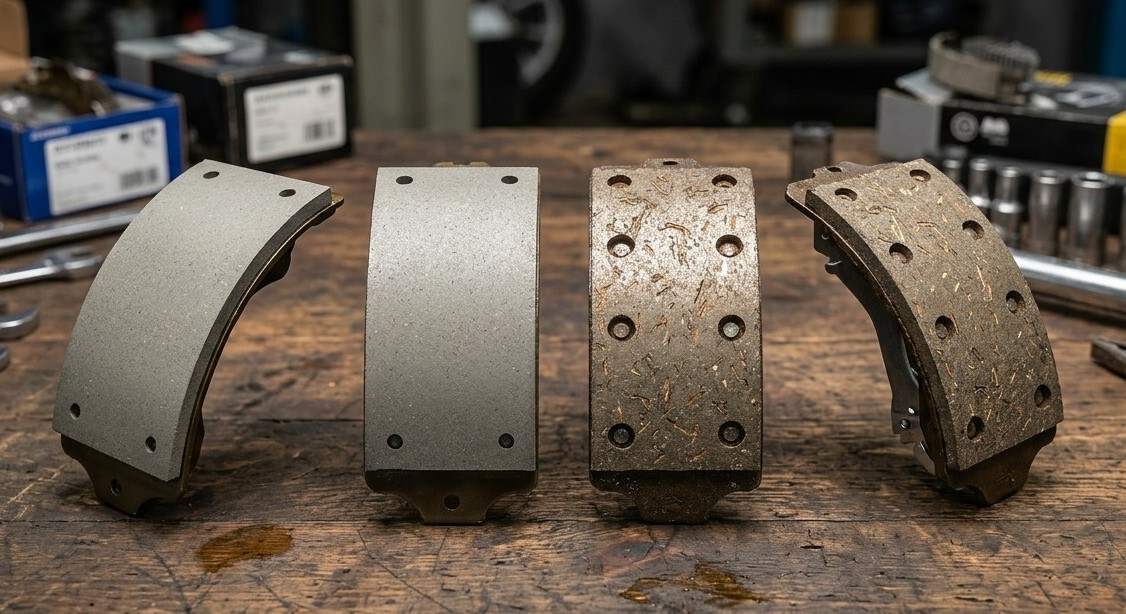
Choosing the right brake lining is important for safe and reliable braking performance. When comparing standard vs heavy-duty brake shoe linings, the main differences are friction performance, load capacity, heat resistance, durability, and operating conditions.
Both types provide controlled friction between the brake shoe and drum. However, standard brake shoe linings are generally suitable for normal-duty applications, while heavy-duty linings are designed for vehicles and equipment exposed to higher loads, temperatures, and demanding conditions.
Understanding these differences can help you select the right brake shoe lining for your application.
A brake shoe lining is the friction material attached to a brake shoe. When the brake system is activated, the brake shoe pushes the lining against the inner surface of a brake drum. The resulting friction slows or stops the rotating wheel.
Brake shoe linings are manufactured from specialized friction materials designed to withstand repeated braking cycles. Depending on the application, these materials may offer different levels of heat resistance, wear resistance, and friction stability.
The correct lining should match the vehicle, braking system, operating environment, and expected workload.
Standard brake shoe linings are designed for everyday braking applications where loads, temperatures, and braking frequency remain within normal operating conditions.
They provide dependable friction performance for vehicles and equipment that do not regularly experience extreme braking demands. Depending on the application, options such as non-asbestos brake lining can provide suitable friction performance without using asbestos-based materials.
Standard linings are commonly used in passenger vehicles, light commercial vehicles, and other applications where braking requirements are moderate.
For routine transportation and general-purpose applications, standard lining can provide a good balance between performance, service life, and cost.
Heavy-duty brake shoe linings are developed for applications where braking systems experience greater loads, higher temperatures, frequent braking, or demanding operating conditions.
Heavy-duty friction materials are designed to maintain consistent braking performance under severe conditions. They can be useful for commercial vehicles, heavy machinery, industrial equipment, and vehicles that regularly carry heavy loads.
Performance varies depending on the friction material and brake system, so the lining should always be selected according to manufacturer specifications.
The main difference between standard and heavy-duty brake shoe linings is how they handle operating demands.
| Feature | Standard Brake Shoe Linings | Heavy-Duty Brake Shoe Linings |
| Typical use | Normal-duty applications | Heavy-duty applications |
| Load capacity | Moderate | High |
| Heat resistance | Standard | Higher |
| Braking frequency | Normal | Frequent or intensive |
| Wear resistance | Good | Enhanced for severe conditions |
| Operating conditions | General | Demanding |
| Common applications | Light vehicles and equipment | Trucks, machinery, industrial equipment |
A standard lining may be sufficient when the braking system operates under normal conditions. Heavy-duty lining becomes more appropriate when the system regularly experiences high loads, repeated braking, or elevated temperatures.
There is no single brake lining that is best for every application. The better option depends on operating conditions.
Standard brake shoe linings are a practical choice when:
Heavy-duty brake shoe linings may be more suitable when:
Using a heavy-duty lining when it is not required does not automatically improve the entire braking system. Compatibility with the brake drum, shoe, vehicle, and braking system remains essential.
Before purchasing a brake shoe lining, consider these important factors.
Identify whether the lining will be used on a passenger vehicle, commercial truck, trailer, construction machine, or industrial equipment. Different systems require different friction characteristics.
Consider the typical and maximum load carried by the vehicle or equipment. Higher loads place greater demands on the braking system.
Frequent braking creates more heat and can increase friction material wear. Applications involving repeated stops may require a lining designed for higher thermal demands.
Temperature, terrain, speed, dust, moisture, and general operating conditions can influence brake lining performance.
The lining must be compatible with the brake drum and shoe. Incorrect friction characteristics can affect braking performance and component wear.
Always check the vehicle or equipment manufacturer’s recommended specifications before selecting a replacement brake lining.
Knowing when to replace brake linings is important for maintaining reliable braking performance. Common warning signs include:
Regular inspection can help identify wear before it becomes a serious problem. Brake components should be inspected and replaced by qualified technicians when necessary.
The choice between standard vs heavy-duty brake shoe linings should be based on the actual demands placed on the braking system rather than simply choosing the strongest option.
Standard brake linings can provide reliable performance for everyday applications, while heavy-duty brake shoe linings are better suited to high-load, high-temperature, and frequent-braking environments. Consider the vehicle type, load, braking frequency, operating environment, brake drum compatibility, and manufacturer recommendations before making a purchase.
For brake shoe linings and related industrial products, Hamza Fasteners Building Materials Trading LLC is among the fasteners suppliers in UAE you can consider for your requirements. Contact now to discuss your product needs.
Discover in-depth guides and practical insights to help you make informed decisions across industrial fastening and engineering applications.
November 14, 2024
November 28, 2024
December 14, 2024
December 28, 2024
January 17, 2025
All Rights Reserved © Hamza Fasteners